• Send Us A Tip
  • Calling all Tech Writers
  • Advertise
Thursday, July 2, 2026
  • Login
TechStory
  • News
  • Crypto
  • Gadgets
  • Memes
  • Gaming
  • Cars
  • AI
  • Startups
  • Markets
  • How to
No Result
View All Result
  • News
  • Crypto
  • Gadgets
  • Memes
  • Gaming
  • Cars
  • AI
  • Startups
  • Markets
  • How to
No Result
View All Result
TechStory
No Result
View All Result
Home Business

Why Public Wi-Fi Is More Dangerous Than You Think

by Ishaan Negi
July 1, 2026
in Business, Markets, News, Tech, Trending, World
Reading Time: 9 mins read
0
Why Public Wi-Fi Is More Dangerous Than You Think

Credits: Le VPN

TwitterWhatsappLinkedin

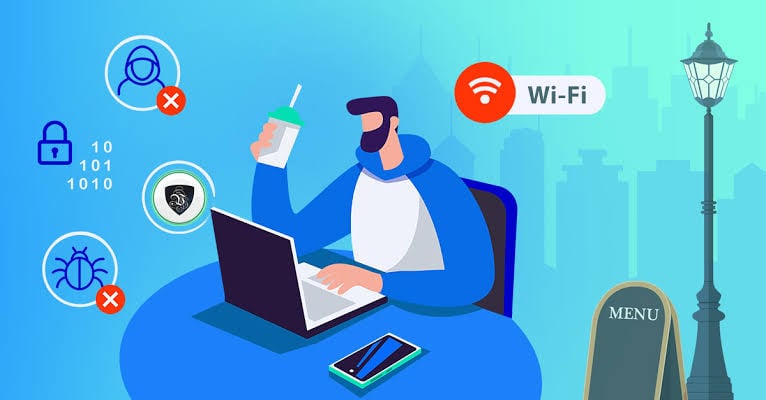
Picture this: you’re waiting for your flight at an airport, sipping coffee at your favorite café, or relaxing in a hotel lobby. You notice a sign that reads “Free Wi-Fi Available.” Within seconds, you’re connected, checking emails, logging into your bank account, uploading work files, or shopping online.

You might also like

2027 Chevrolet Corvette Stingray Becomes the Most Affordable 200 MPH Sports Car

Automakers Turn to Aluminium Wiring as Rising Copper Costs Reshape EV Production

Why SSDs Slow Down Over Time: The Hidden Reasons Behind Falling Performance

It feels incredibly convenient—but it could also be one of the riskiest things you do online.

Public Wi-Fi networks have become an essential part of modern life. They keep us connected wherever we go, making remote work, online banking, video calls, and entertainment possible without using mobile data. However, these same networks are often prime hunting grounds for cybercriminals looking to steal sensitive information.

The good news? You don’t have to avoid public Wi-Fi altogether. By understanding the risks and following a few simple security practices, you can browse safely without becoming an easy target.

Let’s explore why public Wi-Fi can be dangerous and how you can protect yourself.

public-wifi-risks

Credits: Kaspersky

Why Public Wi-Fi Is a Favorite Target for Hackers

Public Wi-Fi networks are designed for convenience. Unlike your home network, most public hotspots don’t require complex authentication or security settings. This ease of access benefits legitimate users—but it also benefits hackers.

Cybercriminals often seek the easiest victims rather than attempting sophisticated attacks. An unsecured public network provides exactly that opportunity.

When multiple strangers connect to the same network, attackers can exploit weak security configurations, poorly protected devices, and careless browsing habits to intercept valuable information.

How Hackers Attack Public Wi-Fi Users

Man-in-the-Middle (MITM) Attacks

One of the most common public Wi-Fi threats is the Man-in-the-Middle (MITM) attack.

Instead of your device communicating directly with the Wi-Fi hotspot, a hacker secretly places themselves between you and the network.

Think of it like sending a confidential letter that first passes through someone else’s mailbox before reaching its destination. That person can read, copy, or even alter the contents without either party noticing.

If the information isn’t encrypted, attackers may gain access to:

  • Email conversations
  • Login credentials
  • Credit card numbers
  • Personal messages
  • Business documents
  • Banking information

In many cases, victims never realize their data has been intercepted.

Fake Wi-Fi Hotspots

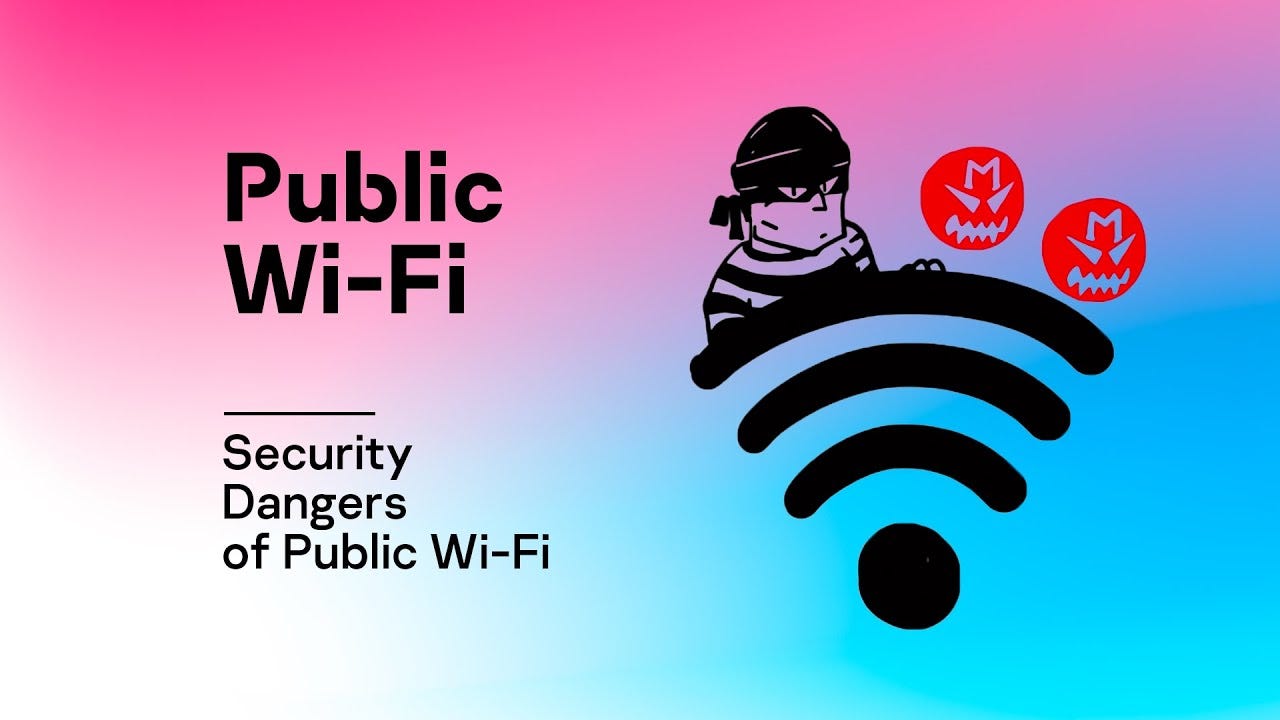
Hackers can also create fake wireless networks that appear legitimate.

Imagine seeing two Wi-Fi networks:

  • Airport_Free_WiFi
  • Airport Free WiFi

At first glance, they seem identical. One belongs to the airport, while the other belongs to a cybercriminal.

Once connected, every piece of information you send passes directly through the attacker’s system.

These fake hotspots, often called “evil twin” networks, are especially common in airports, shopping malls, cafés, hotels, and conferences.

Malware Distribution

Public Wi-Fi isn’t just about stealing passwords.

Attackers may use unsecured networks to spread malware.

For example, you might receive a popup claiming:

  • Your browser needs an update
  • Your video player is outdated
  • A security update is required

Clicking the download can install malicious software that silently steals your passwords, tracks your activity, or encrypts your files for ransom.

Some sophisticated attackers even compromise legitimate routers to inject malicious advertisements or fake software updates into users’ browsing sessions.

Dangers of Public Wi-fi: Free Wi-Fi Could Endanger Business - aNetworks

Credits: aNetworks

Snooping on Shared Networks

Many people unknowingly leave file sharing enabled on their laptops.

On an unsecured public network, this can expose:

  • Documents
  • Photos
  • Shared folders
  • Printers
  • Network drives

A skilled attacker can scan nearby devices looking for exposed resources and gain unauthorized access with surprisingly little effort.

Why Public Wi-Fi Risks Are Growing

Remote work has changed how we use the internet.

Today, professionals regularly access:

  • Corporate VPNs
  • Cloud storage
  • Financial applications
  • Customer databases
  • Collaboration tools
  • Video conferencing platforms

This makes public Wi-Fi users especially attractive targets.

Instead of stealing one social media account, hackers may obtain credentials that unlock an entire corporate network.

As more businesses adopt hybrid work models, cybercriminals continue developing new techniques to exploit employees working from cafés, hotels, airports, and coworking spaces.

Signs That a Public Wi-Fi Network May Be Unsafe

While not every public hotspot is dangerous, certain warning signs should raise suspicion.

Be cautious if:

  • The network has a generic or unusual name.
  • Multiple networks have nearly identical names.
  • You’re automatically redirected to unexpected websites.
  • Popups ask you to install software before connecting.
  • The connection behaves unusually slowly.
  • Websites suddenly display certificate warnings.

If something feels suspicious, it’s usually safer to disconnect.
Is Public WiFi Safe ? The risks of public Wi-Fi | by Quantum Backdoor |  Medium

Credits: Medium

How to Stay Safe on Public Wi-Fi

Fortunately, protecting yourself doesn’t require advanced technical knowledge.

Here are the most effective ways to stay secure.

Use a VPN

A Virtual Private Network (VPN) is one of the best defenses against public Wi-Fi attacks.

A VPN creates an encrypted tunnel between your device and the VPN server.

Even if someone intercepts your internet traffic, they’ll only see encrypted data rather than readable information.

VPNs are particularly important when accessing:

  • Work emails
  • Company resources
  • Banking websites
  • Financial accounts
  • Sensitive documents

Many organizations provide VPN access specifically for employees working remotely.

Always Use HTTPS Websites

Whenever possible, visit websites that use HTTPS instead of plain HTTP.

HTTPS encrypts the communication between your browser and the website, making it much harder for attackers to intercept sensitive information.

Most modern browsers display:

  • A padlock icon
  • “https://” in the address bar

Avoid entering passwords or payment details on websites that don’t use HTTPS.

Many browsers now enforce HTTPS automatically, but it’s still worth checking before entering sensitive information.

Disable File Sharing

File sharing is useful at home or in the office—but rarely necessary in public places.

Before connecting to public Wi-Fi:

  • Turn off network discovery.
  • Disable file sharing.
  • Disable printer sharing.
  • Close unnecessary shared folders.

Windows, macOS, and Linux all provide options to make your device invisible to others on the network.

This simple step significantly reduces your attack surface.

Turn Off Wi-Fi When You’re Not Using It

Many devices continuously search for available wireless networks.

Even if you aren’t actively browsing, your device may automatically attempt to reconnect to previously used hotspots.

This behavior can expose your device to rogue access points.

If you’re working offline or don’t currently need internet access:

  • Disable Wi-Fi.
  • Alternatively, enable Airplane Mode.

Besides improving security, you’ll also conserve battery life.

Avoid Accessing Sensitive Accounts

If possible, avoid logging into:

  • Online banking
  • Investment accounts
  • Government services
  • Healthcare portals

while connected to public Wi-Fi.

If the task can wait until you’re on a trusted home or mobile network, it’s usually worth waiting.

Keep Your Device Updated

Operating system updates often include security patches that protect against newly discovered vulnerabilities.

Whether you use Windows, macOS, Android, or iPhone, install updates promptly.

Likewise, keep your:

  • Browser
  • Antivirus software
  • VPN
  • Applications

fully updated.

Outdated software frequently becomes an easy target for attackers.

Public WiFi: What is the Risk? - United States Cybersecurity Magazine

Credits: United States Cybersecurity Magazine

Enable Multi-Factor Authentication (MFA)

Even if a hacker steals your password, Multi-Factor Authentication (MFA) can stop them from accessing your account.

MFA typically requires:

  • A verification code
  • An authentication app
  • A hardware security key
  • Biometric verification

Enabling MFA on important accounts dramatically improves your security.

Forget Public Networks After Use

Your device may automatically reconnect to networks you’ve joined previously.

After leaving a café, airport, or hotel:

  • Open your Wi-Fi settings.
  • Forget the network.

This prevents your device from reconnecting automatically if someone later creates a fake hotspot using the same network name.

Use Reliable Security Software

No security strategy is complete without good endpoint protection.

Modern security software can detect:

  • Malware
  • Phishing websites
  • Malicious downloads
  • Suspicious network activity
  • Ransomware

While antivirus software isn’t a substitute for safe browsing habits, it provides an important additional layer of protection.

Should You Use Mobile Data Instead?

Whenever practical, mobile data is generally safer than public Wi-Fi.

Cellular networks use stronger encryption and authentication than most public hotspots.

If you’re handling confidential work, making financial transactions, or accessing sensitive personal information, using your phone’s mobile data—or tethering your laptop to your phone—can be a more secure alternative.

Wi-Fi Not: The Dangers of Public Wi-Fi | VyprVPN

Credits: VyprVPN

Public Wi-Fi Doesn’t Have to Be Dangerous

Public Wi-Fi has transformed how we work and stay connected. Whether you’re answering emails from a coffee shop, attending virtual meetings in an airport lounge, or streaming entertainment from a hotel room, these networks offer unmatched convenience.

However, convenience shouldn’t come at the cost of your privacy or security. Cybercriminals actively target public hotspots because they know many users assume “free Wi-Fi” automatically means “safe Wi-Fi.”

Fortunately, staying protected is easier than many people think. Using a trusted VPN, choosing HTTPS websites, disabling file sharing, keeping your software updated, enabling multi-factor authentication, and avoiding sensitive transactions on public networks can dramatically reduce your risk. Combined with reliable security software and a healthy dose of caution, these habits make you a far less attractive target for attackers.

The next time you’re tempted to connect to free Wi-Fi, remember that convenience and security can go hand in hand. With the right precautions, you can enjoy the benefits of public internet access without exposing your personal information, financial accounts, or business data to unnecessary risks. In today’s increasingly connected world, practicing good cybersecurity isn’t just for IT professionals—it’s an essential skill for everyone.


Tags: CybersecurityHTTPSInternet Safetymalware protectionman-in-the-middle attackNetwork SecurityOnline Privacypublic Wi-Fi securityVPNWi-Fi hacking
Tweet54SendShare15
Previous Post

Why SSDs Slow Down Over Time: The Hidden Reasons Behind Falling Performance

Next Post

Automakers Turn to Aluminium Wiring as Rising Copper Costs Reshape EV Production

Ishaan Negi

Ishaan is a student at Sri Venkateswara College, University of Delhi, where he combines his academic pursuits with a deep passion for technology and storytelling. Ever since his school days, Ishaan has been an avid reader, a thoughtful writer, and an articulate speaker. These interests have naturally evolved into a strong inclination towards journalism, especially in the fast-paced world of tech. Known for his balanced approach, Ishaan is committed to presenting unbiased viewpoints and ensuring every story he tells is rooted in facts and multiple perspectives. Whether he’s reporting on emerging startups, corporate developments, or ethical issues in the tech space, he brings a sharp analytical lens and a curiosity-driven mindset to his work. With a strong foundation in research and communication, Ishaan strives to make complex topics accessible to readers while maintaining depth and nuance. His goal is not just to inform but also to spark thoughtful conversations around the ever-evolving tech landscape.

Recommended For You

2027 Chevrolet Corvette Stingray Becomes the Most Affordable 200 MPH Sports Car

by Samir Gautam
July 2, 2026
0
2027 Chevrolet Corvette Stingray Hits 200 MPH

The Chevrolet Corvette has reached another landmark in its seven-decade history. Marking National Corvette Day, General Motors announced that the 2027 Chevrolet Corvette Stingray can now achieve a...

Read more

Automakers Turn to Aluminium Wiring as Rising Copper Costs Reshape EV Production

by Samir Gautam
July 1, 2026
0
The automotive industry is quietly undergoing one of its biggest material changes in decades. As copper prices continue to climb and supply constraints intensify, leading automakers are increasingly replacing traditional copper wiring with aluminium in electric and hybrid vehicles. Luxury brands such as Ferrari and BMW are expanding the use of aluminium wiring across their latest models, joining companies like Tesla and several Chinese electric vehicle manufacturers that adopted the technology earlier. The shift signals more than just a cost-saving exercise. It reflects a broader effort to build lighter, more efficient vehicles while preparing for long-term pressure on global copper supplies. Copper's Cost Challenge Is Driving Change Copper has been the preferred material for automotive electrical systems for generations because of its excellent conductivity and durability. However, growing demand from renewable energy projects, artificial intelligence infrastructure, and expanding data centres has significantly increased pressure on global copper supplies. Industry analysts expect this imbalance between demand and supply to persist for years, pushing manufacturers to explore alternative materials that can deliver similar performance at a lower cost. Aluminium has emerged as the strongest candidate. It currently costs roughly one-quarter as much as copper while offering significant weight savings, making it particularly attractive for electric vehicles where every kilogram affects battery efficiency and driving range. Ferrari and BMW Expand Aluminium Use Ferrari introduced aluminium power cables in its 296 hybrid sports car and has since expanded the technology into additional models, including its newly launched fully electric vehicle. According to the company, switching to aluminium reduces the overall weight of wiring systems by as much as 20 percent. BMW has been using aluminium conductors for more than a decade, beginning with its compact models before gradually integrating them into hybrid and electric vehicles. The company's latest eDrive platform now incorporates aluminium extensively across both high-voltage and low-voltage electrical systems. While aluminium's lower price offers a financial advantage, both manufacturers emphasize that performance, efficiency and weight reduction remain the primary reasons behind the transition. Chinese EV Makers Push Adoption Further China's electric vehicle sector is accelerating the industry's move toward aluminium wiring. Manufacturers including XPeng, Xiaomi and AVATR have adopted the material as competition in the domestic EV market continues to squeeze profit margins. The Chinese government has also encouraged manufacturers to increase aluminium substitution across multiple industries, including automotive, power equipment and household appliances. Engineering experts believe aluminium has substantial room to replace copper, particularly in battery busbars and electrical distribution systems where copper still dominates today's vehicles. Industry-Wide Shift Expected to Continue Consultants and investment analysts expect aluminium adoption to grow steadily over the remainder of the decade. Estimates suggest that around two percent of global copper demand could be replaced by aluminium this year, with that figure potentially reaching six percent by 2030 if copper prices remain elevated. The transition is not without challenges. Aluminium requires greater volume than copper to carry the same electrical current and its production is more energy intensive. Manufacturers must also redesign certain components to accommodate its different physical properties. Despite these engineering considerations, the combination of lower material costs, lighter vehicle weight and long-term supply security is making aluminium an increasingly attractive choice for automakers worldwide. As electric vehicle production expands and pressure on critical raw materials continues to grow, aluminium wiring is rapidly moving from an alternative solution to a mainstream automotive technology. The shift highlights how material innovation is becoming just as important as battery development in shaping the next generation of mobility.

The automotive industry is quietly undergoing one of its biggest material changes in decades. As copper prices continue to climb and supply constraints intensify, leading automakers are increasingly...

Read more

Why SSDs Slow Down Over Time: The Hidden Reasons Behind Falling Performance

by Ishaan Negi
July 1, 2026
0
Why SSDs Slow Down Over Time: The Hidden Reasons Behind Falling Performance

When you install a new Solid-State Drive (SSD), the difference is almost magical. Your computer boots in seconds, applications launch instantly, games load faster, and file transfers feel...

Read more
Next Post
The automotive industry is quietly undergoing one of its biggest material changes in decades. As copper prices continue to climb and supply constraints intensify, leading automakers are increasingly replacing traditional copper wiring with aluminium in electric and hybrid vehicles. Luxury brands such as Ferrari and BMW are expanding the use of aluminium wiring across their latest models, joining companies like Tesla and several Chinese electric vehicle manufacturers that adopted the technology earlier. The shift signals more than just a cost-saving exercise. It reflects a broader effort to build lighter, more efficient vehicles while preparing for long-term pressure on global copper supplies. Copper's Cost Challenge Is Driving Change Copper has been the preferred material for automotive electrical systems for generations because of its excellent conductivity and durability. However, growing demand from renewable energy projects, artificial intelligence infrastructure, and expanding data centres has significantly increased pressure on global copper supplies. Industry analysts expect this imbalance between demand and supply to persist for years, pushing manufacturers to explore alternative materials that can deliver similar performance at a lower cost. Aluminium has emerged as the strongest candidate. It currently costs roughly one-quarter as much as copper while offering significant weight savings, making it particularly attractive for electric vehicles where every kilogram affects battery efficiency and driving range. Ferrari and BMW Expand Aluminium Use Ferrari introduced aluminium power cables in its 296 hybrid sports car and has since expanded the technology into additional models, including its newly launched fully electric vehicle. According to the company, switching to aluminium reduces the overall weight of wiring systems by as much as 20 percent. BMW has been using aluminium conductors for more than a decade, beginning with its compact models before gradually integrating them into hybrid and electric vehicles. The company's latest eDrive platform now incorporates aluminium extensively across both high-voltage and low-voltage electrical systems. While aluminium's lower price offers a financial advantage, both manufacturers emphasize that performance, efficiency and weight reduction remain the primary reasons behind the transition. Chinese EV Makers Push Adoption Further China's electric vehicle sector is accelerating the industry's move toward aluminium wiring. Manufacturers including XPeng, Xiaomi and AVATR have adopted the material as competition in the domestic EV market continues to squeeze profit margins. The Chinese government has also encouraged manufacturers to increase aluminium substitution across multiple industries, including automotive, power equipment and household appliances. Engineering experts believe aluminium has substantial room to replace copper, particularly in battery busbars and electrical distribution systems where copper still dominates today's vehicles. Industry-Wide Shift Expected to Continue Consultants and investment analysts expect aluminium adoption to grow steadily over the remainder of the decade. Estimates suggest that around two percent of global copper demand could be replaced by aluminium this year, with that figure potentially reaching six percent by 2030 if copper prices remain elevated. The transition is not without challenges. Aluminium requires greater volume than copper to carry the same electrical current and its production is more energy intensive. Manufacturers must also redesign certain components to accommodate its different physical properties. Despite these engineering considerations, the combination of lower material costs, lighter vehicle weight and long-term supply security is making aluminium an increasingly attractive choice for automakers worldwide. As electric vehicle production expands and pressure on critical raw materials continues to grow, aluminium wiring is rapidly moving from an alternative solution to a mainstream automotive technology. The shift highlights how material innovation is becoming just as important as battery development in shaping the next generation of mobility.

Automakers Turn to Aluminium Wiring as Rising Copper Costs Reshape EV Production

Please login to join discussion

Techstory

Tech and Business News from around the world. Follow along for latest in the world of Tech, AI, Crypto, EVs, Business Personalities and more.
reach us at info@techstory.in

Advertise With Us

Reach out at - info@techstory.in

Aviator Game India 2026

BROWSE BY TAG

#Crypto #howto 2024 acquisition AI amazon Apple Artificial Intelligence bitcoin Business China cryptocurrency e-commerce electric vehicles Elon Musk Ethereum facebook funding Gaming Google India Instagram Investment ios iPhone IPO Market Markets Meta Microsoft News OpenAI samsung Social Media SpaceX startup startups tech technology Tesla TikTok trend trending twitter US

© 2025 Techstory.in

No Result
View All Result
  • News
  • Crypto
  • Gadgets
  • Memes
  • Gaming
  • Cars
  • AI
  • Startups
  • Markets
  • How to

© 2025 Techstory.in

Welcome Back!

Login to your account below

Forgotten Password?

Retrieve your password

Please enter your username or email address to reset your password.

Log In
Are you sure want to unlock this post?
Unlock left : 0
Are you sure want to cancel subscription?