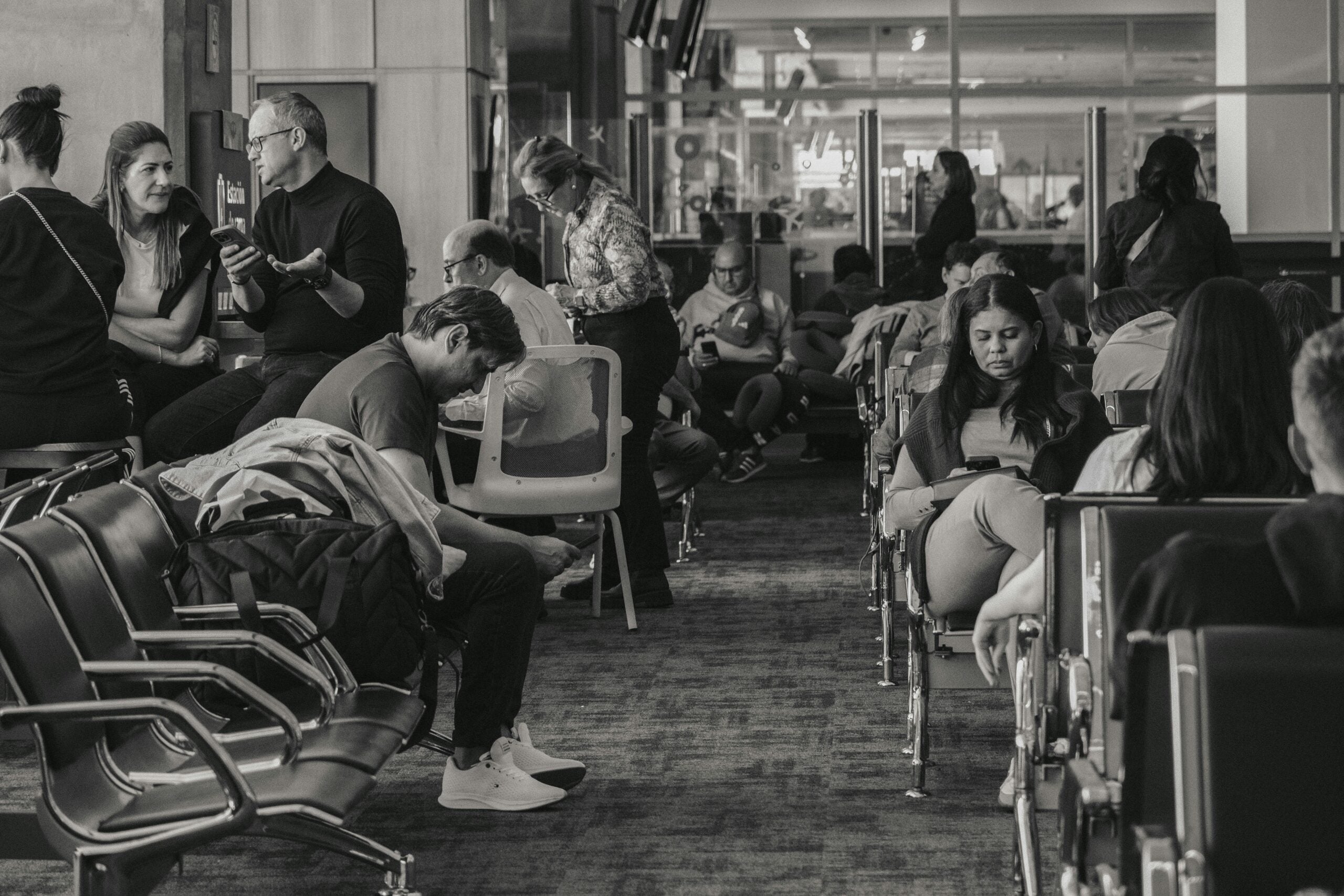
Missing a boarding announcement at an airport is a very ordinary problem. The speakers are too far away. Someone nearby is talking. A suitcase wheel rattles past. Then the announcement ends, and you are left wondering whether you heard “Gate 16” or “Gate 60.”
Frankfurt Airport is testing Auracast at two gates in Terminal 1. Passengers can hear the gate announcements on compatible headphones, earbuds, or smartphones. The trial uses Bluetooth LE Audio for the broadcast. It sounds like a small upgrade to an airport sound system. It is actually a more interesting change in the way Bluetooth can be used.
For years, Bluetooth has meant a private connection. Your phone connects to your earbuds. Your laptop connects to a speaker. Auracast changes that model. It lets one source broadcast audio to many compatible devices nearby.
Bluetooth Stops Being a One-to-One Connection
There is a simple way to see what Auracast changes. Take a TV in a gym, for example. The screen is on, but nobody wants the sound blasting in the room. With Auracast, you could listen through compatible headphones instead.
That is different from the Bluetooth most people know. You normally connect your own phone to your own headphones. Here, the audio starts somewhere else. Several people can pick it up without the source having to deal with each pair of headphones separately.
An airport is a more useful example. A gate announcement can disappear under the noise of people talking, luggage moving around, and aircraft outside. A direct audio feed gives passengers another way to catch the message.
The same thing is already familiar in another form. If you search for an online fishing game Singapore, you can open it on your phone without needing anything beyond the device in your hand. Online Casino Singapore platforms work in much the same way. Auracast applies that kind of direct access to audio in the real world.
And the use cases do not stop at airports. A museum could send commentary to visitors. A conference could offer a room’s audio to attendees who need it. The important part is that the listener can use their own device rather than taking whatever equipment the venue happens to provide.
The QR Code Is Part of the Experience
Frankfurt’s setup includes a useful detail. Passengers can scan a QR code displayed at the gate to join the broadcast. The QR code is not carrying the announcement itself. It helps the user find and access the relevant Auracast stream. That is an important distinction because it shows where this technology is heading.
Munich Airport has followed Frankfurt with its own Auracast pilot. Since July 2026, selected gates have offered passengers live gate announcements through compatible hearing aids, headphones and earbuds.
This is beginning to look less like a technology demonstration and more like infrastructure.
The Bigger Change Is Happening in Public Spaces
We have an odd limitation in how we think about wireless audio. We are used to owning the source. My phone plays my music. My laptop plays my video. My TV sends sound to my headphones. If another person wants to listen, they need their own connection to the same source.
Auracast changes that relationship. A museum could offer a tour through a broadcast channel. A university could send lecture audio to students sitting in a large hall. A stadium could provide an alternative commentary feed. A cinema could offer a direct accessibility stream. A conference could let visitors select the audio channel for a particular room. The possibilities do not require everyone in the building to use the same headphones.
That is one of the reasons Bluetooth SIG describes Auracast as “one-to-many” audio rather than another version of conventional Bluetooth pairing. A transmitter can broadcast to multiple compatible receivers in range.
Auracast also supports private broadcasts. Auracast streams can be protected, with users gaining access through methods such as passwords or QR codes.
That matters in places where audio shouldn’t simply be available to everyone nearby.
The Hardware Catch
A clever standard is not much use if nobody owns devices that support it. That has been one of the biggest questions around Auracast since its introduction.
The situation is changing. Bluetooth SIG now lists a growing range of compatible hearing aids, earbuds, and headphones. Samsung’s current support documentation also shows Auracast being used on Galaxy devices and compatible Buds products for broadcasting audio from a phone to nearby listeners.
Google has also expanded Auracast support across more Android devices, including audio sharing between multiple headphones.
Auracast is not going to work on every device yet. A phone might support it, but an older pair of earbuds may not. The same goes for hearing aids, so there is still some checking to do before someone can rely on it.
That could make the rollout a little messy. A venue can install Auracast today, but plenty of people walking through the door may have no way to use it. Waiting for everyone to upgrade first is not very practical either. Airports and other large venues may simply have to start with the hardware and let the compatible devices arrive over time.
Frankfurt’s trial is useful precisely because it tests the whole chain: public infrastructure, personal devices and the small interaction needed to join the broadcast.
Bluetooth May Have Found a New Job
Bluetooth has usually been about your own devices. Earbuds, watches, keyboards, speakers. You pair something, use it, and move on.
Auracast changes the setup. The source can sit somewhere else entirely. An airport gate can send an announcement to compatible headphones. A museum can send audio to visitors walking through an exhibition. A cinema can provide another audio feed for people who need it.
The interesting part is that visitors do not need to borrow another device. Their own headphones can do the job.
Bluetooth opens up a very different kind of use. Instead of connecting your devices to each other, it can connect you to the space around you.