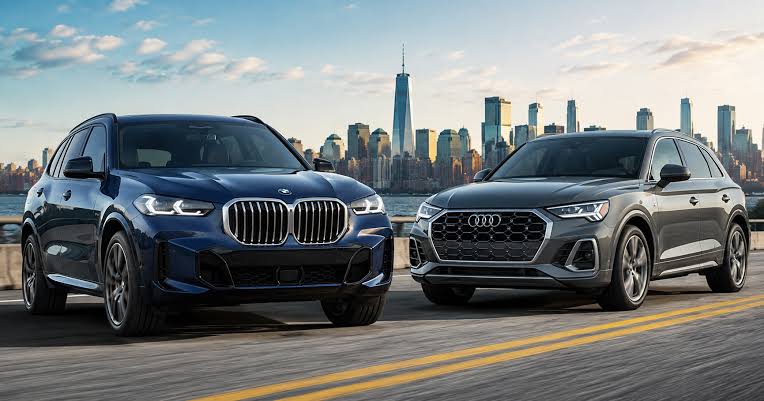
BMW is strengthening its position in the U.S. luxury vehicle market, leaving one of its biggest rivals with an increasingly difficult challenge. Sales figures from the first half of 2026 show the German automaker extending its advantage over Audi, thanks to strong demand for its core SUV and sedan lineup.
While both brands compete across similar market segments, their fortunes have moved in opposite directions this year. BMW has continued building momentum, whereas Audi has struggled with slowing electric vehicle demand and weaker performance from several of its bestselling SUVs.
BMW Builds Momentum Across Its Core Lineup
BMW delivered nearly 187,000 vehicles in the United States during the first six months of 2026, marking healthy year-over-year growth. The performance reinforces the company’s position as one of the country’s leading premium automakers.
Much of that success has come from models that continue to attract a broad customer base. SUVs such as the X5 and X3 remain the company’s strongest performers, while the 3 Series sedan has also posted impressive gains despite growing competition in the luxury segment.
Rather than depending on a single product category, BMW has benefited from a balanced portfolio that includes SUVs, sedans, performance cars, and electric vehicles. This diversified approach has helped the brand adapt to changing consumer preferences.
Audi Faces A Difficult First Half
Audi, on the other hand, has experienced a significant decline in U.S. deliveries. The company recorded fewer than 68,000 vehicle sales during the same period, representing a notable drop compared to last year.
One of the biggest challenges has been its electric vehicle lineup. Several Audi EVs have seen steep declines in demand, reflecting softer consumer interest in premium electric models across the market. At the same time, popular gasoline-powered SUVs like the Q3 and Q5 have also lost ground, limiting the brand’s ability to offset EV weakness.
Although a handful of models, including the A5 and A6, registered modest growth, those gains were not enough to reverse the broader downward trend.
SUVs Continue To Shape The Luxury Market
The latest sales figures once again highlight the importance of SUVs in the premium segment.
BMW’s X5 remains one of the brand’s biggest success stories, significantly outselling Audi’s Q7. The X3 has also maintained strong demand, while Audi’s competing models have struggled to keep pace.
Consumers continue to favor practical luxury SUVs that combine performance, technology, and everyday usability. BMW appears to have aligned its product strategy more effectively with these buying preferences, allowing it to capture a larger share of the market.
What’s Next For Both Brands?
Audi is preparing to refresh its SUV portfolio with newer models expected to arrive over the coming years. These launches could help improve the brand’s competitiveness, particularly if they address changing customer expectations around technology, interior quality, and electrification.
BMW, meanwhile, is preparing for the arrival of its next-generation Neue Klasse platform, which is expected to introduce a new wave of electric vehicles while maintaining the company’s focus on driving dynamics and premium design.
For now, however, the numbers tell a clear story. BMW has successfully navigated a challenging market, while Audi faces the task of rebuilding momentum in one of the world’s most competitive luxury automotive markets. If current trends continue, the gap between the two German rivals may become even wider before the end of 2026.