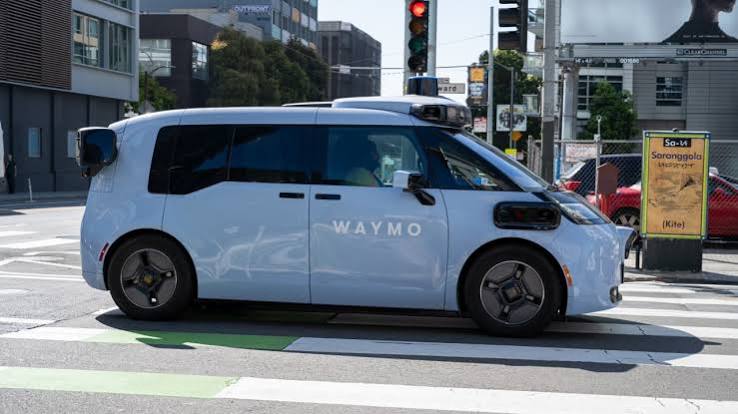
Chinese electric vehicles remain largely absent from American roads, despite companies such as BYD, Xiaomi and Zeekr becoming major players in the global EV industry. But one US company is making an unusual bet: paying enormous import tariffs to bring Chinese-made vehicles into America.
Waymo, Alphabet’s autonomous ride-hailing company, has imported thousands of Zeekr vehicles from China to build its next generation of robotaxis. The strategy may seem expensive, but for Waymo, these cars could still offer a cheaper route to autonomous transportation.

Credits: Yahoo Finance
Chinese EVs Face a Huge US Tariff
Chinese electric cars can technically be imported into the US, but the economics are difficult. Vehicles shipped from China face a tariff of around 127.5%, meaning the cost of an imported EV can more than double before it reaches American customers.
That has effectively kept Chinese EV brands out of the mainstream US market. Manufacturers such as BYD and Xiaomi may be competing aggressively in other parts of the world, but their cars are rarely seen at American dealerships.
Waymo, however, has a different reason for importing them.
The company does not intend to sell the Zeekr vehicles to American consumers. Instead, it is transforming them into autonomous robotaxis and operating them as part of its ride-hailing network.
Since 2024, Waymo has reportedly imported around 3,200 Zeekr vehicles through the Port of Los Angeles, including approximately 2,600 units in 2026 alone.
Meet Waymo’s Ojai Robotaxi
Waymo’s Chinese-made vehicle is known as the Ojai in the US and the CM1e in China. The robotaxi made its public debut in San Francisco, Los Angeles and Phoenix in May.
The rollout coincided with the introduction of the sixth generation of Waymo Driver, the company’s autonomous-driving technology. Waymo expects thousands of Ojai vehicles to eventually join its fleet.
The choice of Zeekr is largely about economics.
Waymo’s previous robotaxi platform was based on the Jaguar I-Pace. Retrofitting those vehicles with the hardware required for autonomous driving can reportedly cost more than $200,000 per vehicle.
The Ojai offers a potentially cheaper alternative, even after tariffs.
Why the Tariffs Still Make Sense
Import declarations reportedly put the base cost of an Ojai at around $38,000. Once the 127.5% tariff is applied, the figure rises to approximately $86,500.
Waymo then installs its autonomous-driving hardware and software, with the additional equipment estimated to cost around $25,000 per vehicle.
That puts the final cost above $100,000.
While that sounds expensive for an EV, it can still be significantly cheaper than converting a Jaguar I-Pace into a robotaxi. For Waymo, the calculation is therefore not about whether the Ojai is cheap, but whether it is cheaper than the alternatives.
The company is essentially paying the tariff because the underlying vehicle is inexpensive enough to remain economically attractive after the additional costs.
Why Waymo Removes Chinese Technology
There is another important reason Waymo does not simply drive the Chinese vehicles as they arrive.
Before the Ojai vehicles enter American operations, their original sensors and computing systems are removed. Waymo then installs its own autonomous-driving equipment at a facility in Mesa, Arizona.
This setup also addresses US restrictions surrounding Chinese-connected vehicle technology and data collection.
The cars therefore become more than imported Chinese EVs. They serve as platforms for Waymo’s own autonomous-driving system.
The latest Waymo Driver generation reportedly uses fewer sensors than previous versions, helping reduce costs while improving its ability to operate in challenging conditions.
Waymo Is Betting Big on Robotaxis
The decision to absorb massive tariffs shows how important vehicle costs have become in the robotaxi race.
Autonomous driving requires more than sophisticated software. Companies also need thousands of vehicles that can be equipped with expensive sensors, computers and other hardware. If each vehicle costs hundreds of thousands of dollars, scaling a robotaxi service becomes extremely difficult.
Waymo is therefore looking for a combination of affordability, reliability and manufacturing scale.
The company has faced setbacks along the way, including incidents involving work zones, traffic signals and pedestrians. Yet it continues to expand.
California regulators recently approved a major expansion of Waymo’s operating area, allowing the company to increase its service footprint and expand into cities including San Diego and Sacramento.
Credits: The Economic Times
A Strange EV Trade-Off
Waymo’s Ojai strategy highlights an unusual reality in the American EV market.
Chinese electric cars may be too expensive to sell competitively in the US because of tariffs, yet they can still make economic sense when purchased by a company that needs thousands of vehicles for a specialised purpose.
Waymo is effectively paying the tariff not because Chinese EVs are cheap after entering America, but because they can still be cheaper than building its robotaxi fleet around more expensive alternatives.
The bigger question now is whether this approach can help Waymo scale autonomous transportation fast enough to make robotaxis a mainstream business.