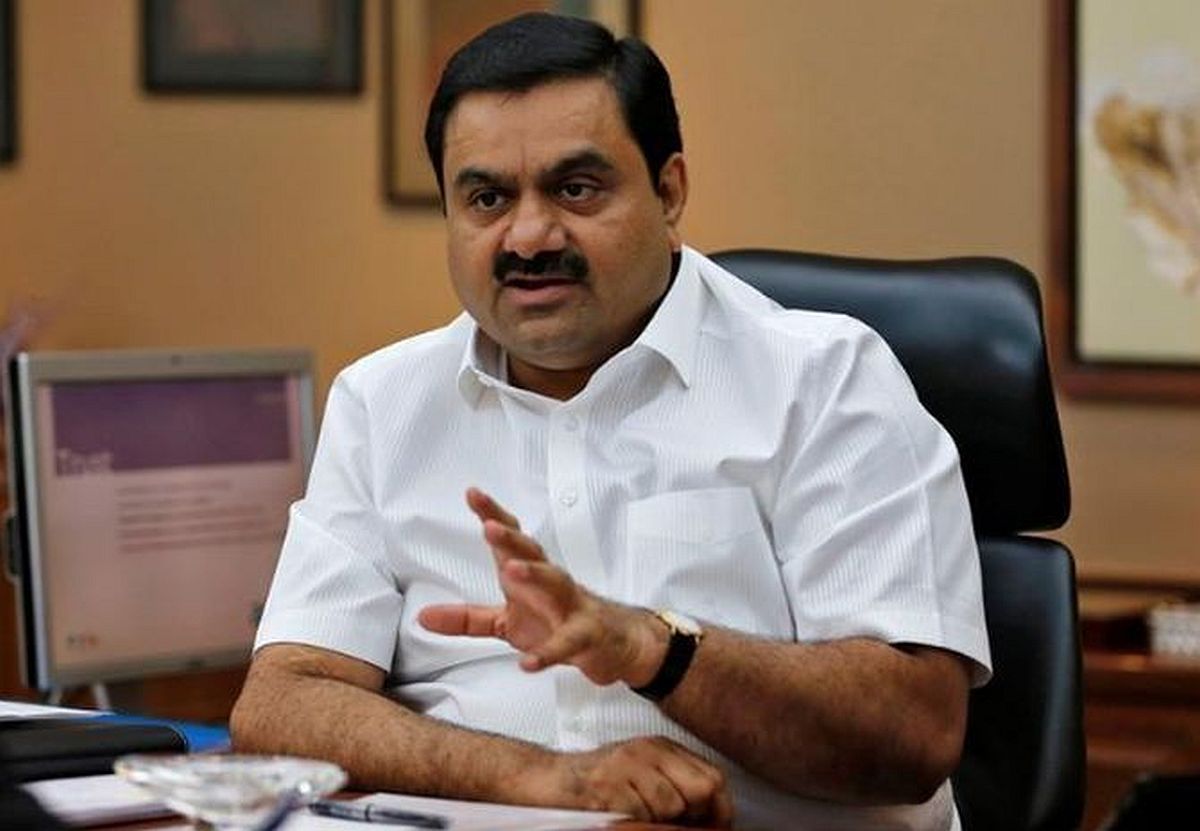
India’s nuclear energy sector is on the cusp of a historic transformation — and the Adani Group is positioning itself at the centre of it.
The Ahmedabad-based infrastructure giant has incorporated a new wholly owned subsidiary, Adani Atomic Energy, under Adani Power. According to regulatory filings, the entity will focus on generating, transmitting and distributing electricity derived from nuclear and atomic energy sources — signalling a bold diversification into one of the most tightly controlled sectors of the Indian economy.
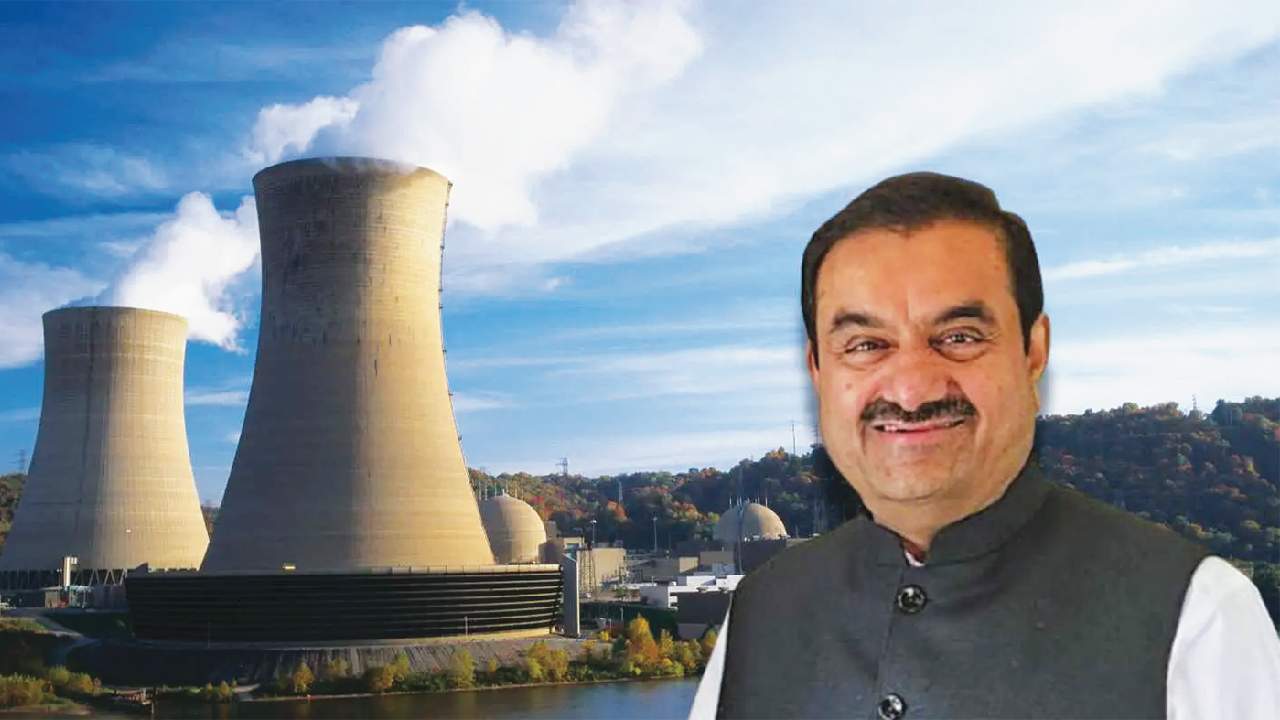
Credits: Daily Pioneer
A Policy Shift Decades in the Making
For decades, India’s nuclear power programme was almost entirely under government control. But that equation is now changing.
The Centre has indicated a major policy shift to allow greater private sector participation in atomic power generation. This move aligns with India’s long-term clean energy ambitions and its broader strategy to strengthen energy security.
Currently, India has about 9 GW of installed nuclear capacity, accounting for roughly 3% of total power generation. That contribution, while steady, remains modest compared to renewables and thermal power.
But the ambition is massive: the government aims to scale nuclear capacity to 100 GW by 2047. If achieved, nuclear power could account for nearly 10% of India’s energy mix — transforming it from a niche contributor to a core pillar of the country’s baseload supply.
The “Shanti Bill” And What It Means
At the heart of this transformation is a proposed legislative framework — commonly referred to as the “Shanti Bill.” The framework lays the groundwork for private companies to build, own and operate nuclear power plants, including Small Modular Reactors (SMRs).
Key provisions include:
-
Permission for private participation in plant ownership and operations
-
Allowance of up to 49% foreign direct investment (FDI)
-
Continued government control over uranium mining beyond specific thresholds
-
Spent fuel management remaining under state custody
-
Strict regulation of fissile material, source material and heavy water
In essence, while ownership and operational roles may open up, strategic and security-sensitive aspects remain firmly under government oversight.
This calibrated liberalisation attempts to balance investment attraction with national security concerns — a crucial factor in nuclear energy policymaking.
Why Nuclear, Why Now?
India’s power demand is rising rapidly, fuelled by industrial expansion, digitalisation, electric mobility and urbanisation. While renewable energy has scaled impressively, its intermittency poses challenges for grid stability.
Nuclear power offers a compelling advantage: it provides stable, low-carbon baseload electricity. Unlike solar or wind, it operates continuously and can anchor the grid when renewable output fluctuates.
With India targeting net-zero emissions by 2070, nuclear energy is increasingly being seen as a strategic complement to renewables rather than a competitor.
For infrastructure majors like the Adani Group, this represents both a business opportunity and a long-term strategic play in the evolving energy mix.
Corporate Interest And Political Heat
Adani’s entry into nuclear energy has not gone unnoticed in political circles.
Congress leader Jairam Ramesh criticised recent regulatory changes, alleging that they were structured to benefit specific corporate interests. The opposition has framed the legislative shift as tailored to large conglomerates.
The government, however, has maintained that reforms are essential to accelerate clean energy deployment and reduce dependence on fossil fuels. Officials argue that expanding nuclear capacity requires private capital, technology partnerships and execution capability — areas where major corporate groups can contribute.
The debate underscores how nuclear energy, beyond being a technical subject, remains deeply political.
Credits: Outlook Business
The Strategic Implications
For the Adani Group, this move adds another layer to its fast-expanding energy portfolio, which already spans thermal power, renewables, transmission and green hydrogen ambitions.
If private participation in nuclear energy materialises as envisioned, early movers could gain strategic advantages — particularly in emerging technologies like SMRs, which promise lower capital costs and modular scalability.
More broadly, the sector’s opening signals a potential restructuring of India’s energy ecosystem. The entry of private players such as Adani — alongside interest from other conglomerates — could catalyse investment, technology transfer and faster capacity addition.
As India navigates the dual challenge of meeting rising power demand while decarbonising, nuclear energy may well emerge as a crucial bridge between today’s fossil-heavy grid and tomorrow’s clean-energy future.
And with Adani Atomic Energy now formally incorporated, the atomic chapter of India’s private sector participation story has officially begun.