

• Send Us A Tip
  • Calling all Tech Writers
  • Advertise
Sunday, June 21, 2026
  • Login
TechStory
  • News
  • Crypto
  • Gadgets
  • Memes
  • Gaming
  • Cars
  • AI
  • Startups
  • Markets
  • How to
No Result
View All Result
  • News
  • Crypto
  • Gadgets
  • Memes
  • Gaming
  • Cars
  • AI
  • Startups
  • Markets
  • How to
No Result
View All Result
TechStory
No Result
View All Result
Home Tech Automobiles

Buy Any Of These 13 EVs And Instantly Slash $7,500

by Ashmita Maria
January 8, 2024
in Automobiles, Cars, Clean Energy, Electric Vehicles, Future Tech, Manufacturing, Tech
Reading Time: 2 mins read
0
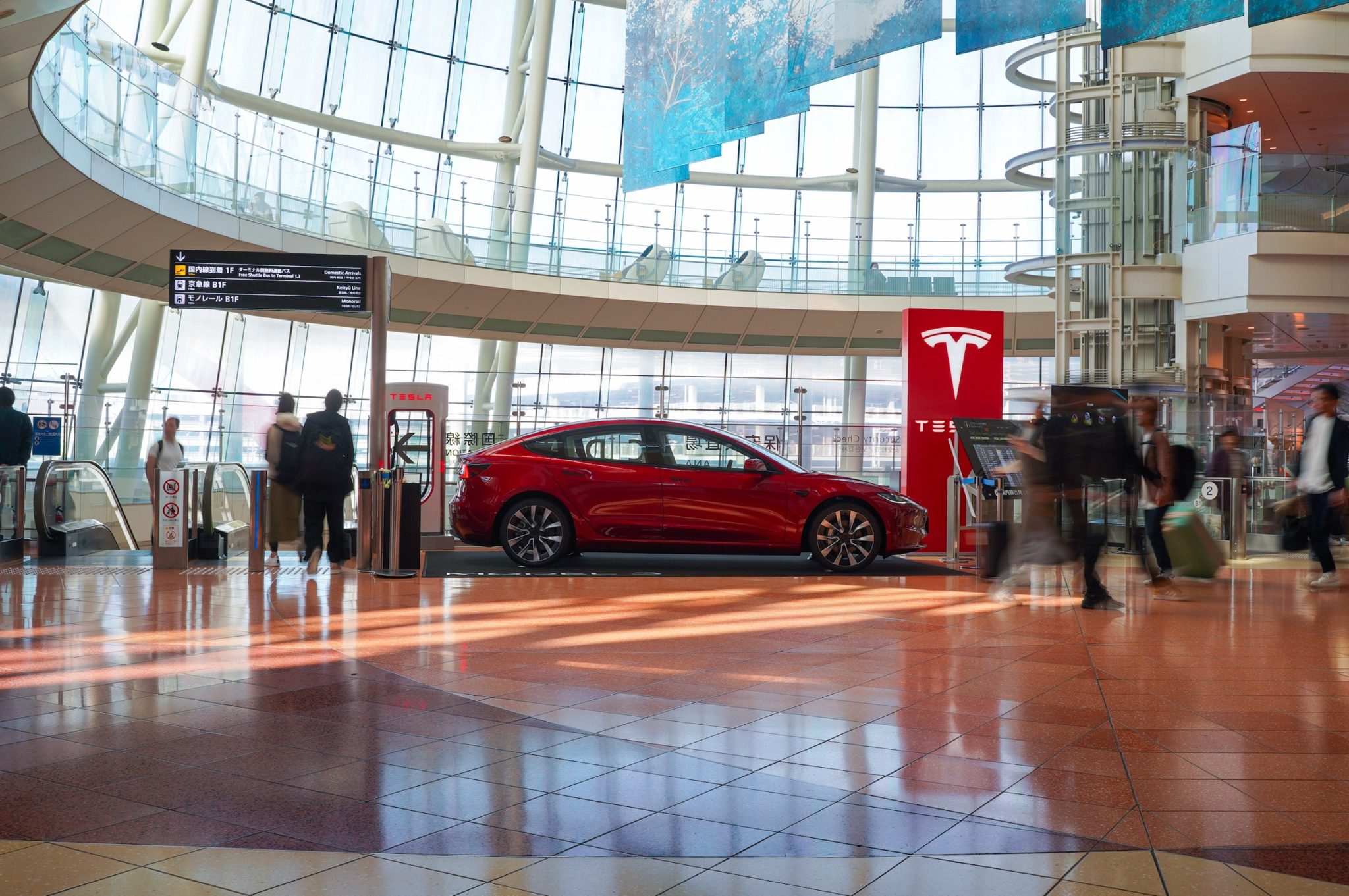
Tesla Japan
TwitterWhatsappLinkedin

The landscape for electric vehicle (EV) tax credits in 2024 presents a mix of opportunities and challenges for potential buyers. The good news is the immediate availability of the tax credit at the time of purchase, a significant shift from the previous requirement of waiting until tax filing. However, the downside is a narrowed field of eligible vehicles, with only 13 models qualifying due to stringent manufacturing requirements.

You might also like

How Long Do Honda Civics Last? Why the Compact Sedan Still Has a Long-Life Reputation

Mitsubishi Hints at a Future Worthy of the Lancer Evolution Legacy

How to Increase Gas Mileage: Small Driving Changes That Save Big at the Pump


Immediate Credit at Purchase

Starting January 1, 2024, eligible consumers can directly transfer the value of the EV tax credit to the dealer. This approach effectively reduces the purchase price or counts towards the down payment. Dealers are responsible for submitting the tax credit information to the Internal Revenue Service. The credit value varies, offering up to $7,500 for new vehicles and $4,000 for used ones.


Eligibility Criteria

To be eligible, cars must adhere to specific price caps: $80,000 for SUVs and $55,000 for sedans, wagons, or hatchbacks. Additionally, the first $3,750 of the credit hinges on a portion of the vehicle’s battery components being produced or assembled in North America. The remaining $3,750 is contingent upon the critical minerals used in the battery being extracted or processed in the U.S. or a free-trade agreement partner, or made from materials recycled in North America.


List of Eligible Vehicles

The eligibility criteria exclude EVs with battery components built or assembled by entities from China, Iran, North Korea, or Russia. The 13 vehicles that qualify for the tax credit in 2024, along with their eligible credit amounts, are:

1. Chevrolet Bolt EV – $7,500
2. Chevrolet Bolt EUV – $7,500
3. Tesla Model 3 Performance – $7,500
4. Tesla Model Y – $7,500
5. Tesla Model X – $7,500
6. Rivian R1S – $3,750
7. Rivian R1T – $3,750
8. Ford F-150 Lightning – $7,500
9. Ford Escape plug-in hybrid – $3,750
10. Chrysler Pacifica PHEV – $7,500
11. Jeep Cherokee PHEV 4xe – $3,750
12. Jeep Wrangler PHEV 4xe – $3,750
13. Lincoln Corsair Grand Touring – $3,750

Buyers can verify a vehicle’s eligibility by entering its VIN at fueleconomy.gov.


Additional Qualifications

To qualify for the credits, the vehicle must be purchased for personal use, not for resale. There are also income requirements: Adjusted Gross Income must be under $300,000 for married couples filing jointly, $225,000 for heads of households, or $150,000 for other filers. Qualified vehicles must have a battery capacity of at least 7 kilowatt-hours, a gross vehicle weight rating of less than 14,000 pounds, and be manufactured by a qualified manufacturer. Additionally, qualifying vehicles must be made in the U.S. and adhere to the aforementioned MSRP limits.


The immediate point-of-sale credit and narrowed eligibility list create a double-edged sword for EV adoption. The immediate financial benefit could significantly boost consumer demand, making EVs more attractive by lowering the upfront cost. However, the limited selection might deter some buyers, particularly those seeking specific models or price points.

Recent trends showcase positive momentum in EV adoption. Global sales surged 55% in 2022, with over 10 million EVs sold. This growth is fueled by factors like falling battery costs, expanding charging infrastructure, and government incentives. In the US, EVs accounted for 5% of new car sales in 2022, but are projected to reach 10% by 2025.

It’s crucial to monitor how the 2024 credit program interacts with these trends. While the narrowed list might initially hamper some segments, the overall boost in affordability could propel broader adoption in the long run. The success of the program will depend on its ability to strike a balance between incentivizing domestic production and encouraging overall consumer uptake of EVs.

Tags: Cars eligible for EV Tax CreditsEV Credits EligibiltyEV tax creditsUS Federal Tax Credits for EVs
Tweet55SendShare15
Previous Post

Chinese Authorities Arrest Evergrande EV Executive

Next Post

Honda Plots A $14 Billion EV And Battery Plant Gambit In Canada

Ashmita Maria

A detail-oriented and organized individual who believes in the power of bringing a change through research based policy-making. With an interest in the varied fields of development and labour economics, political writing and filmmaking, I write when I'm not intellectualizing my problems :)

Recommended For You

How Long Do Honda Civics Last? Why the Compact Sedan Still Has a Long-Life Reputation

by Samir Gautam
June 21, 2026
0
Honda Civic lifespan guide

The Honda Civic has spent decades building a reputation as one of the safest bets in the compact-car market. It is affordable to run, easy to live with...

Read more

Mitsubishi Hints at a Future Worthy of the Lancer Evolution Legacy

by Samir Gautam
June 21, 2026
0
Mitsubishi Hints at a Future Worthy of the Lancer Evolution Legacy

Mitsubishi Motors has reignited hopes among performance-car fans after its new president said the company wants to become capable of building another great car in the mould of...

Read more

How to Increase Gas Mileage: Small Driving Changes That Save Big at the Pump

by Samir Gautam
June 21, 2026
0
Fuel prices may rise and fall, but one thing stays constant: drivers want to make every litre go further. The good news is that improving gas mileage does not always require buying a new hybrid or changing cars altogether. A few disciplined habits behind the wheel, along with basic maintenance, can make a noticeable difference over time. For most drivers, the biggest gains come from reducing waste. That means less aggressive acceleration, fewer unnecessary trips, correctly inflated tyres and a car that is mechanically healthy. Smooth Driving Uses Less Fuel The quickest way to burn more fuel is to drive as if every traffic light is a starting grid. Hard acceleration, sharp braking and sudden changes in speed force the engine to work harder and consume more petrol. A smoother approach works better. Accelerate gradually, maintain a steady speed where possible and look ahead to anticipate traffic. If a red light is visible in the distance, easing off the accelerator early is usually more efficient than rushing forward and braking hard at the last moment. Speed also matters. As speeds rise, aerodynamic drag increases and the engine needs more energy to keep the vehicle moving. On highways, staying within a sensible cruising range rather than constantly pushing at high speeds can help reduce fuel consumption. Check Tyre Pressure Regularly Tyres are easy to ignore until something goes wrong, but they play a major role in fuel economy. Under-inflated tyres create more rolling resistance, which means the engine has to use more fuel just to move the car forward. Drivers should check tyre pressure at least once a month, preferably when the tyres are cold. The correct pressure is usually listed on the driver-side door frame or in the owner’s manual. It is important not to use the maximum pressure printed on the tyre sidewall as a target. That figure is not necessarily the recommended setting for the vehicle. The US Environmental Protection Agency notes that under-inflation reduces fuel economy, increases tyre wear and adds to emissions. Stop Carrying Extra Weight A car is not a storage room. Heavy items in the boot may seem harmless, but extra weight makes the engine work harder, especially in city traffic where the vehicle is constantly stopping and starting. Clear out unnecessary tools, boxes, sports gear and other items that have been sitting in the car for weeks. Roof racks and cargo boxes can also hurt mileage by increasing aerodynamic drag. If they are not being used, remove them. This is especially relevant for drivers who spend most of their time on highways, where wind resistance becomes a bigger factor. Keep Up With Maintenance A well-maintained vehicle is usually a more fuel-efficient vehicle. Delayed oil changes, worn spark plugs, clogged air filters, dragging brakes and poor wheel alignment can all affect how efficiently a car runs. Following the manufacturer’s service schedule is the safest route. Use the recommended engine oil grade and get warning lights checked instead of ignoring them. A sudden drop in mileage can be an early sign that something needs attention. The EPA advises motorists to follow their vehicle maintenance schedule and use the recommended motor oil to support better fuel efficiency and safer operation. Combine Trips and Avoid Long Idling Short trips can be surprisingly fuel-hungry because the engine has not had enough time to reach its most efficient operating temperature. Combining errands into one planned route can reduce cold starts, unnecessary kilometres and fuel use. Idling is another quiet fuel drain. If you are waiting for an extended period, switching off the engine can be more sensible than leaving it running. Modern cars do not need long warm-up periods before driving. Start, settle for a few seconds and drive gently. The Bottom Line Better gas mileage is less about one miracle trick and more about consistent habits. Drive smoothly, maintain the right tyre pressure, remove excess weight and service the car on time. These small changes may not feel dramatic on a single trip, but over months of commuting, school runs and highway drives, they can add up to real savings.

Fuel prices may rise and fall, but one thing stays constant: drivers want to make every litre go further. The good news is that improving gas mileage does...

Read more
Next Post
Honda Plots A $14 Billion EV And Battery Plant Gambit In Canada

Honda Plots A $14 Billion EV And Battery Plant Gambit In Canada

Please login to join discussion

Techstory

Tech and Business News from around the world. Follow along for latest in the world of Tech, AI, Crypto, EVs, Business Personalities and more.
reach us at info@techstory.in

Advertise With Us

Reach out at - info@techstory.in

Aviator Game India 2026

BROWSE BY TAG

#Crypto #howto 2024 acquisition AI amazon Apple Artificial Intelligence bitcoin Business China cryptocurrency e-commerce electric vehicles Elon Musk Ethereum facebook funding Gaming Google India Instagram Investment ios iPhone IPO Market Markets Meta Microsoft News OpenAI samsung Social Media SpaceX startup startups tech technology Tesla TikTok trend trending twitter US

© 2025 Techstory.in

No Result
View All Result
  • News
  • Crypto
  • Gadgets
  • Memes
  • Gaming
  • Cars
  • AI
  • Startups
  • Markets
  • How to

© 2025 Techstory.in

Welcome Back!

Login to your account below

Forgotten Password?

Retrieve your password

Please enter your username or email address to reset your password.

Log In
Are you sure want to unlock this post?
Unlock left : 0
Are you sure want to cancel subscription?