You might also like
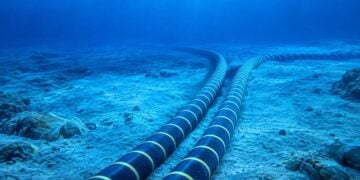
China is turning to an unexpected solution to manage the growing heat from its expanding AI infrastructure: sinking data centers into the ocean. In June, construction began on a wind‑powered underwater data center approximately six miles off the coast of Shanghai. The project marks a bold effort to meet surging demand for digital services while reducing energy and water usage.
Shanghai-based Hailanyun Technology, also known as HiCloud, is leading the initiative. This offshore facility follows an earlier pilot project installed off Hainan in late 2022. The data center will rely heavily on seawater for cooling and nearly all of its electricity from a nearby offshore wind farm. Company officials say this setup will cut electricity consumption by at least 30 percent compared with land-based data centers.
Data centers are the backbone of cloud computing and AI applications, storing vast amounts of data and performing complex computations. They operate continuously, and their servers generate intense heat that must be dissipated or risk damaging hardware. On average, up to 40 percent of a data center’s power use goes toward cooling, typically achieved by circulating chilled water or spray systems. These conventional cooling methods extract water from rivers, groundwater or treatment plants, increasing stress on vital freshwater resources.
China’s new approach takes the opposite route—cooling servers with seawater pumped directly through radiators attached to server racks. The ocean’s natural temperature and high volume allow heat to be carried away efficiently. Hailanyun says that seawater cooling paired with wind power can slash energy use substantially.
The Shanghai underwater data center is slated to contain 198 server racks and between 396 and 792 AI-capable servers in its first phase. Operation is expected to begin in September. Once online, the facility should train a large language model akin to GPT‑3.5 in one day. That workload typically requires thousands of servers, yet the pilot center is compact by comparison—medium-sized Chinese data centers often house 3,000 racks, while hyperscale facilities can exceed 10,000.
Energy will come from an offshore wind farm supplying nearly 97 percent of its electricity. The rest may come from the coastal power grid or solar installations. By harnessing wind energy and seawater cooling, the project aims to reduce carbon emissions and relieve pressure on taps and aquifers.
China’s marine data center effort draws inspiration from Microsoft’s Project Natick, which in the early 2010s submerged a container holding over 800 servers in the North Sea near Scotland. Microsoft retrieved the pod after two years and found it performed reliably with fewer hardware failures, thanks to the nitrogen‑filled environment and absence of human interference. That experiment demonstrated the potential of sealed, submerged centers—but Microsoft later paused further development.
Hailanyun, in contrast, has moved from test pod to commercial rollout in under 30 months. Researchers like Zhang Ning at the University of California, Davis note that this rapid progression outstrips what Microsoft ever attempted. Hailanyun is already planning further projects involving multiple wind‑powered, undersea centers with government support.
Still, the concept raises environmental concerns. Microsoft’s data showed only a negligible temperature rise—mere thousandths of a degree—in surrounding water. Hailanyun reports similar findings from tests in the Pearl River, saying thermal impact remains below one degree Celsius in normal operations. However, climate scientists caution that during marine heat waves, warmer outflow could stress marine life by reducing oxygen levels in the water.
Security is another area of concern. A 2024 study found that underwater sound waves from specialized speakers could damage sealed sea‑floor structures. Hailanyun asserts its design is environmentally safe, pointing to assessments and low‑impact findings. Nonetheless, oversight and regulation will be key as the technology scales.
Beyond China’s shores, other nations are watching closely. South Korea has announced plans for its own submerged data hubs. Japan and Singapore are exploring floating or sea‑surface centers powered by wind or wave energy. Whether these efforts succeed will depend less on engineering and more on addressing marine regulations, ecological risk assessments and establishing supply chains for undersea infrastructure.
If China’s pilot proves viable, its wind‑powered undersea centers could reshape how data infrastructure is built. By cutting water and energy usage while offering a cool environment for sensitive hardware, submerged data centers may become an attractive option for coastal nations facing dry inland regions and heavy freshwater constraints. But the approach comes with trade‑offs, including potential ecological effects, security vulnerabilities and significant upfront costs.
Still, China’s initiative stands as a bold experiment in greener computing. With offshore wind farms and ocean cooling, it offers a potentially cleaner path for running energy‑hungry AI models. The impact may extend beyond one pilot project—if regulation permits wider adoption, undersea data centers could play a meaningful role in the future of global cloud infrastructure.
China’s underwater data center off Shanghai demonstrates how creative engineering can address critical challenges in digital growth. With proofs of energy reductions and seawater cooling under its belt, Hailanyun is betting that ocean‑based data hubs can scale to meet the nation’s ambitions in artificial intelligence. As competing technologies evolve, the coming years will reveal whether this underwater strategy becomes a broader trend or remains a novel experiment in efficient server cooling.
The ocean may prove to be a calm home for data servers—and if managed carefully, these deepwater installations might help power AI in a way that respects both digital demand and environmental limits.