In the last decade, Elon Musk has become one of the most talked-about figures in technology. His ventures span multiple industries, from electric vehicles and energy storage to space exploration and artificial intelligence. Among these interests, his control of the social media platform formerly known as Twitter, now renamed X, continues to attract global attention. Musk has made it clear that he sees X not merely as a space for online interaction but as a central hub for information exchange, creativity, and artificial intelligence applications. His latest announcement about the platform reveals how far he is willing to go to change its functioning, even if the changes require vast amounts of computational power and substantial financial resources.
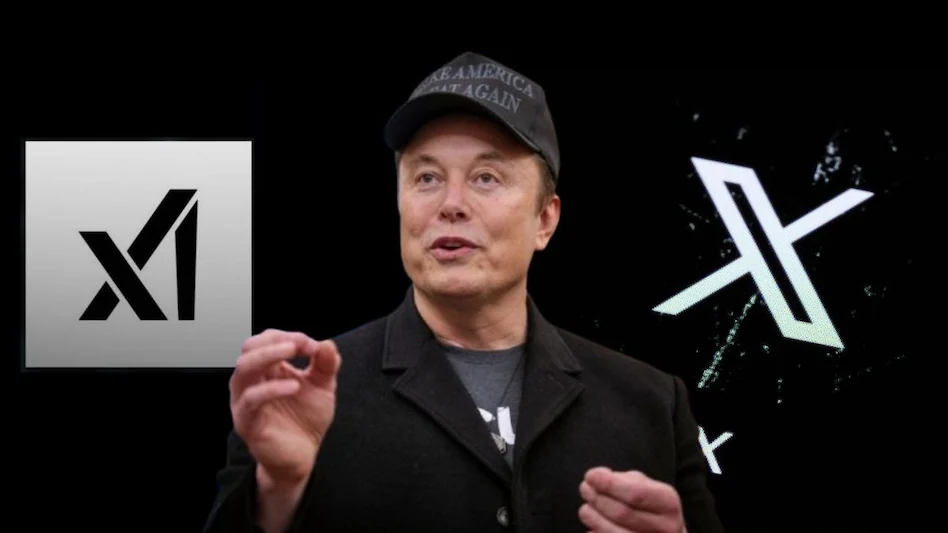
On Saturday, Musk announced that X is testing a new algorithm powered by Grok 4 Mini, an artificial intelligence model developed under his company xAI. According to Musk, this system already demonstrates better results than the older algorithm that governed user feeds on the platform. He expressed confidence that the shift, though complex and resource-intensive, is worth pursuing. In his words, “Am trying out the new algorithm powered by Grok 4 Mini. It’s definitely better. Will require ~20k GPUs to roll out to all users and there is higher latency, but the juice is worth the squeeze.”
This comment highlights two important elements. The first is Musk’s satisfaction with the performance of the Grok 4 Mini model, suggesting that it provides better recommendations or user experiences than the previous design. The second is his acknowledgment of the difficulties that will accompany a full-scale rollout. A requirement of 20,000 GPUs represents an immense demand for computing power. GPUs, or graphical processing units, are specialised chips that enable artificial intelligence systems to process data at high speed. Securing, installing, and maintaining this level of hardware is neither quick nor inexpensive. Moreover, Musk admitted that the system brings higher latency, which means that users may experience slower responses when browsing the platform. Despite these hurdles, his confidence in the technology is unwavering.
Musk’s phrase, “the juice is worth the squeeze,” reflects his view that the long-term advantages outweigh the temporary challenges. This has been a recurring theme across his career, from building reusable rockets to creating electric cars that could compete with traditional vehicles. In each case, Musk has shown a willingness to accept setbacks and short-term inefficiencies if he believes the final outcome will reshape an industry. Applying the same principle to X, he seems prepared to risk slower speeds and high infrastructure costs in order to secure a feed system that he sees as superior.
The announcement did not stop at the algorithm upgrade. Musk also revealed that X users would soon gain temporary access to a new feature called Grok Imagine, which he described as a “super fast” image and video generator. This feature is part of xAI’s broader work on generative artificial intelligence. While many platforms already offer tools that allow users to create synthetic images or videos, Musk’s claim is that Grok Imagine stands out for its speed and efficiency. He promised that for a limited period, users would be able to experiment with the feature for free. Such a move could attract fresh engagement from creators, designers, and casual users eager to test out AI-driven creative tools without cost.
Taken together, the twin announcements signal Musk’s long-term ambitions for X. He envisions the platform as more than a place for text-based posts and short-form conversation. By introducing advanced algorithms and creative tools, he wants to turn X into a space where artificial intelligence is integrated into the everyday user experience. This reflects a broader movement in the tech industry, where social media and AI are increasingly merging. Platforms like TikTok already rely heavily on AI-driven recommendation systems, while tools such as OpenAI’s ChatGPT and image generators have gained mainstream attention. Musk’s strategy seems to be to place X firmly at this intersection of social media and artificial intelligence.
The reaction of users to these developments will be crucial. While many are likely to welcome the chance to experiment with new tools like Grok Imagine, others may express concern about the performance issues linked to higher latency. In the fast-moving world of social media, even a slight delay can reduce satisfaction and lead users to spend less time on the platform. Musk has always presented himself as someone willing to test the limits of technology, but user patience can be limited. If delays are too noticeable or if system performance declines, users might express frustration, regardless of the long-term advantages Musk sees.
The broader context of Musk’s announcement also deserves attention. Since taking over Twitter in 2022, Musk has made multiple adjustments to the platform’s algorithm and moderation rules. Many of these changes have been controversial, with critics claiming that they weakened the quality of conversation, reduced visibility for certain groups, and encouraged the spread of misinformation. A large number of scientists and educators who once relied heavily on Twitter for professional communication have since shifted to alternatives such as Bluesky. Surveys of over 800 professionals in science communication confirm this trend, with Bluesky now considered the most pleasant and reliable platform by many researchers.
The decline of Twitter as a preferred platform for professionals highlights the importance of algorithms in shaping online experience. Before Musk’s takeover, Twitter was widely seen as an essential tool for academic and scientific discussion. Users could rely on a steady flow of content from both their networks and beyond, thanks to an algorithm that prioritised variety and engagement. After changes to the feed system, many long-time users reported dramatic drops in engagement. Posts that once received wide circulation barely reached audiences, regardless of their content quality or the number of followers. For those who depended on the platform for outreach, the changes were disastrous.
This context makes Musk’s latest focus on algorithms even more important. If Grok 4 Mini truly represents an improvement, it could mark a step towards restoring user confidence in the platform. However, it also raises questions about who benefits from these algorithmic changes. While Musk insists that the new system is “better,” such evaluations depend on perspective. What Musk may view as better could be judged differently by journalists, scientists, or ordinary users who are concerned about visibility, fairness, and moderation.
Another area of interest is Musk’s emphasis on GPU requirements. The scale of 20,000 GPUs illustrates the growing energy and hardware demands of advanced artificial intelligence. These chips are among the most expensive and difficult to secure in the current global market. Companies across sectors, from healthcare to finance to defence, are competing for the same limited supply. By committing X to such a resource-heavy upgrade, Musk is essentially betting that the platform’s future lies in deep integration with AI, and that this investment will ultimately pay off in terms of engagement and revenue.
The introduction of Grok Imagine also places X in competition with existing AI creative tools. Platforms like MidJourney, Stable Diffusion, and OpenAI’s DALL·E have already carved out strong positions in the market. Musk’s offering will need to distinguish itself not only through speed but also through reliability, quality, and moderation. Allowing free use for a limited time is a strategic way to generate interest, but sustaining long-term usage will depend on how Grok Imagine compares to these established tools. For creators, ease of use and the quality of generated content are more important than speed alone.
Moreover, these announcements connect directly to Musk’s long-term vision of creating an “everything app.” He has spoken about X becoming a central platform not just for social media but for communication, payments, content creation, and artificial intelligence. By integrating features like Grok Imagine, he is taking steps toward realising that idea. However, history suggests that creating a platform that successfully combines all these functions is extremely challenging. Previous attempts by companies in Asia to create multi-purpose “super apps” have succeeded in part due to unique cultural and economic conditions that may not be easy to replicate elsewhere. Musk’s vision will need to overcome similar obstacles in Western markets.
For observers, Musk’s approach raises deeper questions about the balance between innovation and stability. On one hand, he is undeniably pushing the boundaries of what a social media platform can be by incorporating high-powered artificial intelligence directly into its functions. On the other, each shift introduces uncertainty for users, especially those who rely on consistent performance for professional or personal communication. This balance between experimentation and reliability may define X’s future.
It is also important to consider the role of moderation alongside these technical advances. Many users left Twitter after Musk relaxed moderation rules, which they argued encouraged harassment and misinformation. Even the most advanced algorithm cannot restore trust if users feel unsafe or marginalised on the platform. While Musk often frames his decisions as technical improvements, the social and cultural dimensions of these changes are equally important. Whether Grok 4 Mini or Grok Imagine will make users feel more engaged and respected is a question that cannot be answered by computational power alone.