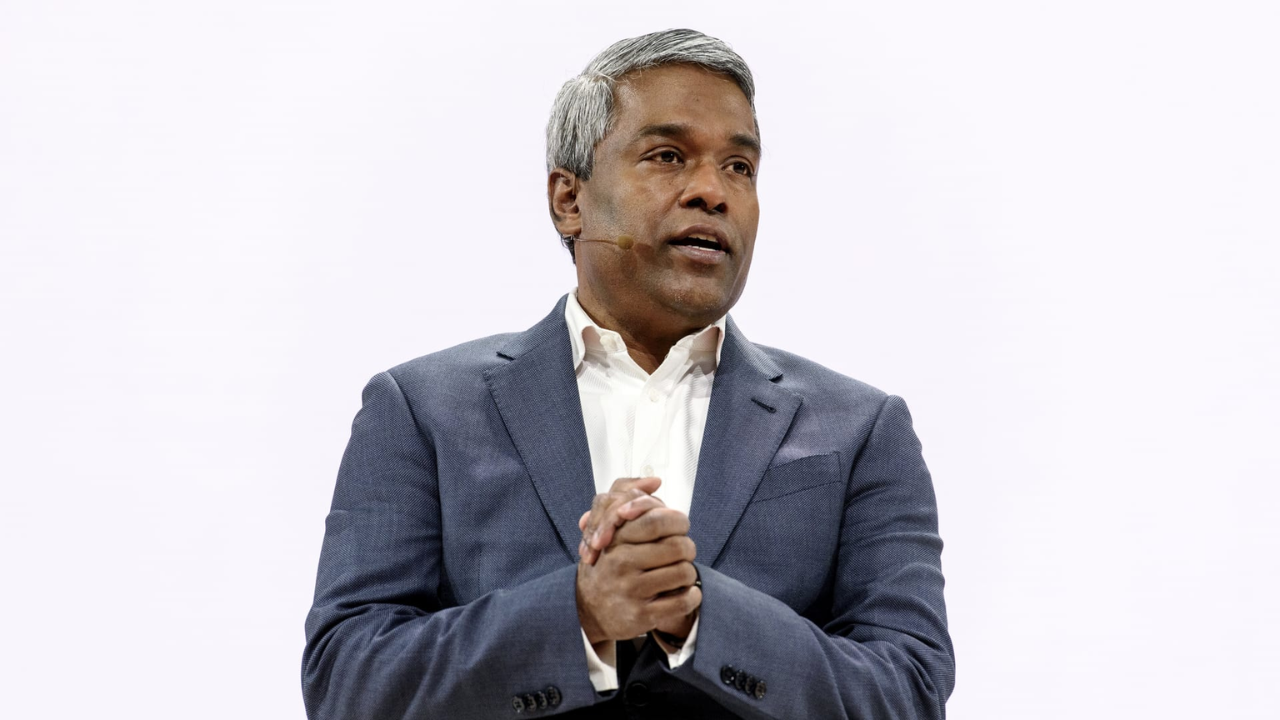
It is a fear that the world will become jobless due to artificial intelligence and a defining concern for this period. But Google Cloud Chief Executive Thomas Kurian views the AI revolution sweeping across the workplace quite differently.
As Kurian puts it, the myth that AI is here to replace human workers is not just wrong—it is toxic. Speaking to his fellow tech professionals and business leaders, he has been making the case that AI is actually a tool for amplification, not extinction. The technology, he explains, is intended to bridge the gap between what we can do today and what we can do with the right support.
The Google Cloud Perspective states AI Takes Tasks, Not Jobs
Kurian supports his optimism with specific anecdotes involving Google products. Consider the Google Customer Engagement Suite, a machine-powered platform meant to manage customer service engagements. When this product was first contemplated by companies, many fretted they’d have to reduce their customer service staff wholesale.
The reality? “Ninety-nine percent have not had to release anyone,” says Kurian.
Instead of taking the place of human representatives, the AI handles the daily, repetitive inquiries that would otherwise fall between the cracks, the password reset requests, straightforward FAQs, and straightforward requests that aren’t based on human judgment or empathy. That frees actual humans to work on tough problems that genuinely do need a person.
Google itself has borne out Kurian’s reasoning. Google CEO Sundar Pichai recently announced that Google engineers have become 10% more productive with their introduction of AI tools.
That does not sound terribly glamorous, but consider just what that actually means in practice: less time wasted by engineers on dull debugging and boiler code, and more on challenging problems in a creative manner and new things.
This is the pattern Kurian sees emerging across industries. AI isn’t taking jobs, it’s taking tasks. The boring, repetitive, soul-crushing tasks that nobody particularly enjoys anyway.
How the Intelligent Intern Model Unlocks Human Potential?
Kurian’s favorite analogy for AI is that of a “teammate” or aide. Consider less as a replacement worker and more as a very intelligent intern that will never fatigue, that will never make sloppy errors on repetitive tasks, and is always available to assist.
The advantage of this process is that:
- Task division: AI performs menial work while humans address intricate problems
- Time liberation: Workers gain hours previously spent on routine activities
- Focus intensification: There is focus on high-impact, value-added projects by teams
- Creativity kickstart: Liberation from administration fuels innovation
Kurian is not unaware of the transition, however. He stresses that achieving AI potential will mean serious spend on training and upskilling. You can’t just roll out AI-enabled tools and hope magic will result you have to support the workforce in getting accustomed and learning to work with the new technologies hand in hand.
He refers to earlier technology revolutions. The industrial revolution, the personal computer, the internet all generated panic that they would lead to wholesale unemployment. They ultimately generated more work than they lost, though with periods of readjustment and workers having to reskill.
A Pragmatic Optimist’s Guide to Collaborative Enhancement, Not Job Destruction
What he is advocating is a balanced, measured incorporation of AI at work. He resists both scare pieces that create excessive panic as well as overly innocent reports that suppress issues that already abound.
His recommended approach includes:
- Considering AI as a cooperative rather than a competitive instrument
- Investments in ongoing learning and developmental activities
- Aiming at augmenting human strengths with AI strengths
- Providing avenues for employees to move to higher value-added job grades
The Bottom Line Kurian’s message is ultimately a pragmatic optimist one. The AI revolution is not a myth, and it will redefine work. But if companies tackle this transformation with a strategic approach with measured implementation and with strong support for their workforce then AI is a dynamic force for job enhancement, not job destruction.
The workers with technological expertise who become adept at collaborating with AI will not only persevere during the transition-they’ll flourish in it, doing more fulfilling, meaningful, and imaginative work than ever.
The secret is to conceptualize AI not as a competitor to fear, but as an inevitable partner to be celebrated. It is humans and computers, not humans or computers, in the future work that Kurian sees. Instead, humans and computers will collaborate to achieve things they couldn’t do individually.