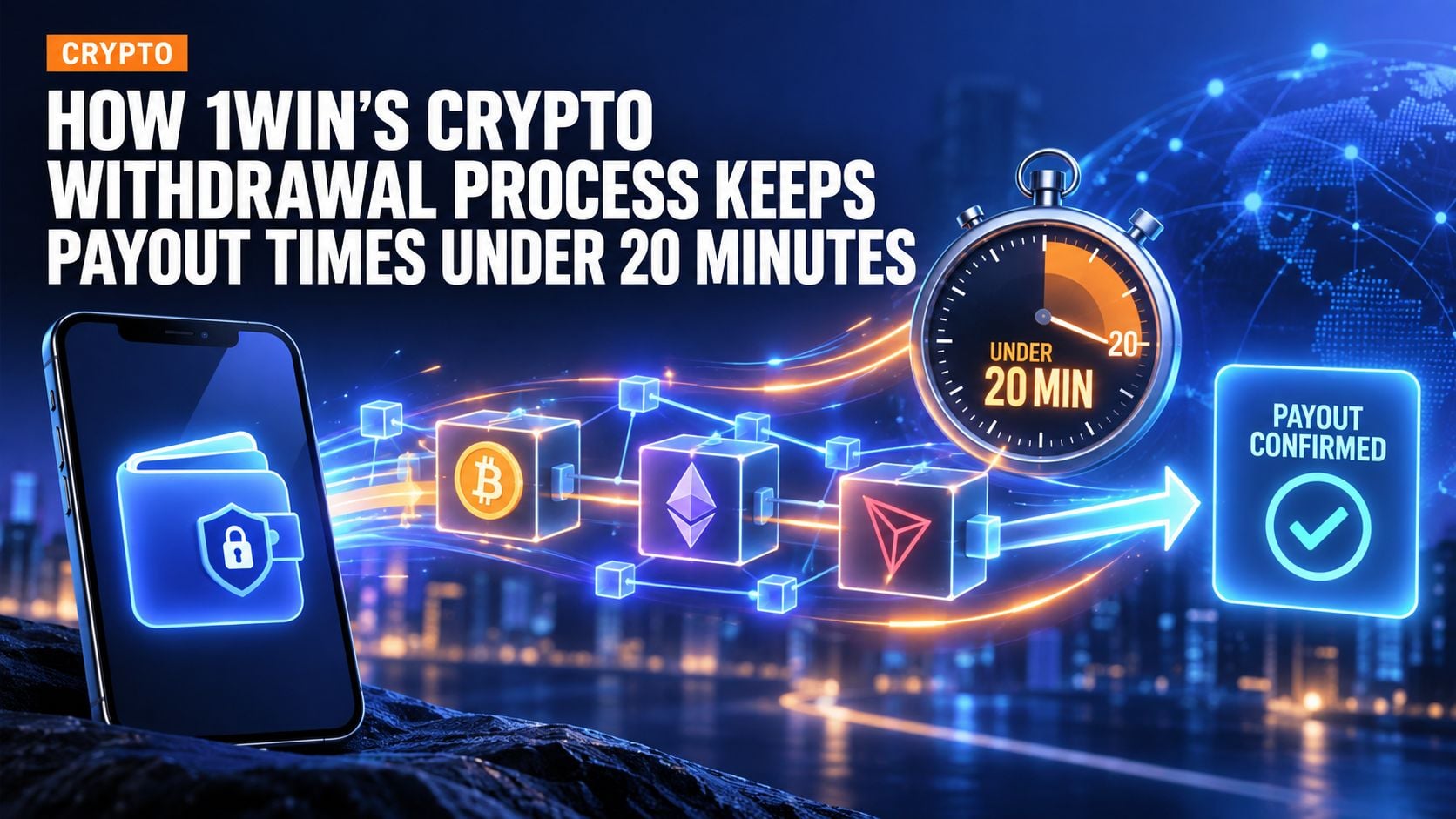
When moving digital funds out of an account, players naturally search for how long they will need to wait and what processing timeframe is considered standard today. In an ideal digital ecosystem, transfers should settle almost instantly, yet actual payout speeds vary drastically across platforms.
Understanding the complete 1win withdrawal process provides clear insight into how modern platforms bridge the gap between user expectations and backend execution. From the moment a user clicks the submit button to the exact second funds reflected in a personal crypto wallet, an intricate series of automated steps takes place.
While traditional finance often delays transactions for hours or days, digital asset transfers can operate near the actual speed limit of underlying blockchain networks when backed by dedicated technical infrastructure.
Why Withdrawal Speed Is a Common Concern in Online Betting
In the online betting industry, withdrawal speed is frequently a major source of concern and discussion among users. Players regularly ask why a payout takes hours or even days when public blockchain networks process transactions in mere minutes or seconds.
The root cause lies in traditional industry practices that have lingered for years. Historically, online betting platforms relied on legacy banking rails and batch processing, where payout requests accumulated in queues until operators reviewed them manually during regular working hours.
This reliance on manual intervention creates severe bottlenecks, especially during high-traffic periods such as major sports tournaments or weekend matches. When request volumes spike, manual risk assessment queues lengthen, internal databases slow down, and processing times stretch significantly.
Furthermore, traditional identity checks often trigger at the exact moment a user requests a withdrawal, forcing players to wait through unexpected verification delays while their funds remain in a pending state.
Another major industry challenge involves liquidity management. Platforms frequently divide operational funds across cold offline storage, multi-signature vaults, and hot wallets for security purposes.
If a hot wallet runs low during peak hours, staff members must manually authorize transfers from cold storage, adding another physical barrier to fast payouts.
Weekend slowdowns and third-party payment gateway checks further compound these delays, leaving players uncertain about the status of their transactions.
How 1win’s Crypto Payout Process Works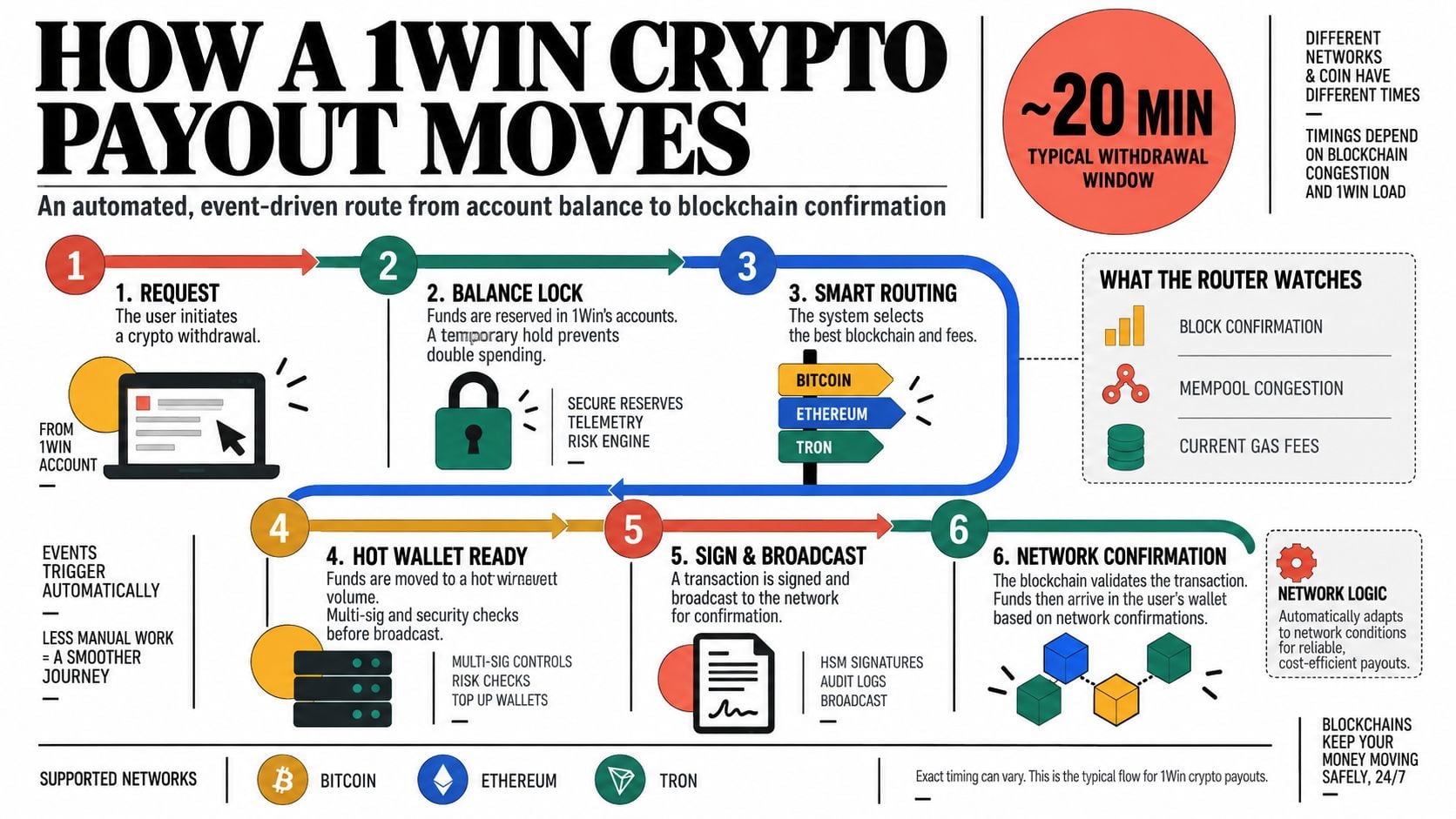
Eliminating internal payout delays requires replacing manual queues with an automated, event-driven backend. The overall 1win crypto withdrawal time typically stays within a ~20-minute window because the core architecture relies on intelligent routing rather than manual staff approvals.
When a user initiates a request, automated microservices instantly take over the pipeline. First, internal balance checks occur within milliseconds to lock funds and prevent double-spending inside the system.
The backend routing engine then evaluates outgoing network conditions across chains such as Bitcoin, Ethereum, and Tron. Instead of placing a 1win crypto withdrawal into a generic waiting line, software continuously tracks block generation rates, mempool congestion, and current gas fees to select the most efficient outgoing node.
Automated hot wallet management further accelerates execution through dynamic self-balancing algorithms. Predictive models forecast daily payout volumes, topping up active wallets prior to peak traffic hours so that manual transfers from cold storage are never required during operational spikes.
Once the route is confirmed, the system programmatically constructs and signs the transaction using multi-signature security protocols before broadcasting it directly to the blockchain.
The ~20-minute timeframe represents the actual duration required for decentralized consensus and block confirmations on public ledgers, while internal database operations take only seconds.
If a specific network experiences temporary congestion, automated fee management raises outgoing gas fees dynamically to ensure miners prioritize the transaction.
Verification Runs Alongside Withdrawal, Not Instead of It
Processing crypto payouts rapidly can introduce security risks if risk assessment is handled poorly. In traditional systems, platforms pause transactions at the moment of cashout to run security reviews, forcing users to wait through tedious identity checks.
The 1win verification mechanism avoids this bottleneck by running security assessments continuously in the background rather than freezing funds when a user clicks withdraw.
From the initial login, automated machine-learning models evaluate hundreds of behavioral parameters without interrupting user activity. Risk algorithms track session telemetry, IP changes, device fingerprints, and transaction histories in real time.
When a payout is submitted, the system checks whether the request falls within normal risk profiles. If risk scores remain low, the algorithm approves the payout automatically within milliseconds. Automated blockchain intelligence simultaneously scans the recipient address against global risk databases to prevent illicit transfers.
Manual reviews are reserved exclusively for anomalous activity, ensuring robust compliance without delaying legitimate transactions.
What This Means in Practice: Limits and Processing Times
From a practical standpoint, an automated payout system directly benefits users through operational predictability and clear transaction tracking. Understanding the minimum withdrawal at 1win helps users plan transfers efficiently, as micro-transactions process with the exact same speed and automated precision as larger payouts.
Because internal computational overhead is virtually zero, transaction speed remains identical regardless of the payout amount; only external network gas fees vary based on the chosen cryptocurrency chain.
Users also gain full visibility throughout the payout lifecycle. Once the backend completes its internal checks – typically within seconds – the platform generates a public transaction hash (TxID).
This hash displays immediately inside the account dashboard, allowing users to track progress live on a blockchain explorer rather than guessing what a generic “pending” status means.
As a practical tip, users should always double-check their destination address, select lower-congested network options during peak hours, and complete basic profile verification early to ensure completely seamless cashouts.
Should any edge-case queries or account-specific questions arise, user feedback highlights that reaching out directly to the 24/7 live chat or official support desk provides the fastest resolution from technical specialists.