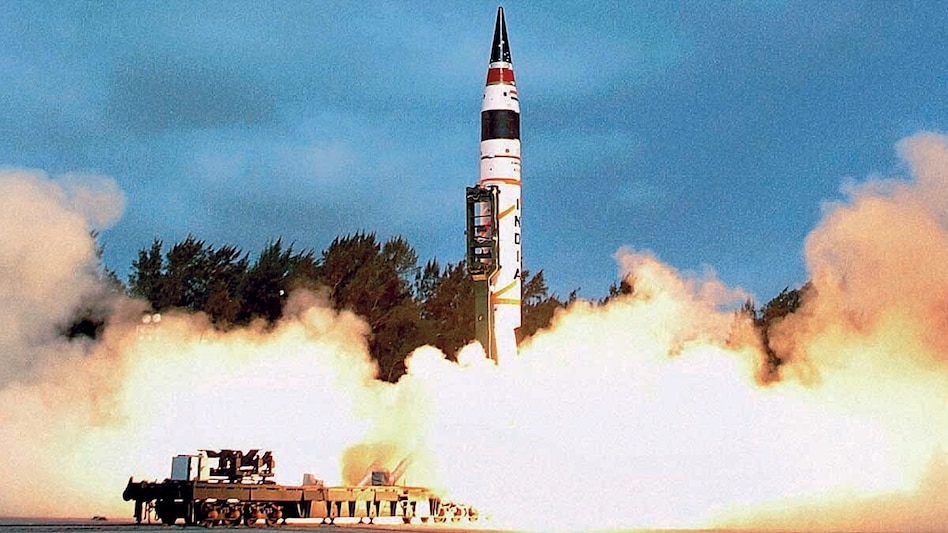
New Delhi, July 18, 2025 — The skies over Odisha lit up on the evening of July 17 as India test-fired two of its most iconic ballistic missiles—Prithvi-II and Agni-I—from the Integrated Test Range in Chandipur. But this wasn’t just a routine check of systems. It was a resounding statement from the heart of India’s strategic command: we are ready, resilient, and watching.
The test, conducted under the watchful eyes of the Strategic Forces Command (SFC), comes just two months after the May 7–10 military flare-up with Pakistan—a tense episode that had brought the region to the brink.
Credits: Business Today
Strategic Show of Strength: Not Just a Test, But a Message
According to the Ministry of Defence, both missile systems “validated all operational and technical parameters” during the launches. But beyond the data and telemetry lies a deeper truth—this was about assurance and assertion.
With regional security dynamics shifting rapidly, these launches tell friends and adversaries alike that India’s nuclear-capable missile systems are not only functional but are constantly evolving and adapting to modern warfare requirements.
Prithvi-II: Compact, Precise, and Battle-Ready
First up in the twin test was the Prithvi-II—a short-range ballistic missile developed by DRDO as part of India’s Integrated Guided Missile Development Programme (IGMDP). Though compact in design, it has a range of 350 kilometers and can deliver a 500-kg warhead, either conventional or nuclear.
What makes Prithvi-II particularly potent is its high-accuracy strike capability, especially in tactical battlefields. Over the years, it has undergone numerous upgrades and now stands as a battlefield game-changer, deployed with frontline forces for rapid retaliation and precision assault.
Agni-I: Power-Packed Precision Over 900 Kilometers
Following the successful Prithvi launch, India rolled out the big gun: Agni-I, the shortest-range missile in the legendary Agni series. With a reach of 700 to 900 km and a payload capacity of 1,000 kg, it is designed to hit key enemy assets deep within hostile territory.
Unlike its longer-range cousins (Agni-IV and Agni-V), Agni-I is meant for quick deployment, and can be launched from mobile platforms, giving India a significant edge in response agility. It fills the critical gap between tactical strike capability and strategic deterrence—a bridge between battlefield dominance and long-range power projection.
A Day Earlier in Ladakh: Akash Prime Hits Two Aerial Targets at 4,500m
And as if one milestone wasn’t enough, just a day before, the Indian Army’s upgraded Akash Prime air defence system scripted another success in the icy heights of Ladakh. The missile intercepted two high-speed unmanned aerial targets at an altitude of 4,500 meters, proving that India’s defences aren’t limited by terrain—or ambition.
The Akash Prime now features a new indigenous radio frequency seeker, vastly improving its targeting and interception capabilities. It’s yet another shining example of the “Make in India” defence mantra turning into high-altitude reality.
Operation Sindoor Echoes: India’s Defence Tech Comes of Age
Both tests come on the heels of Operation Sindoor, a high-level military operation (details classified) where India’s indigenously developed missile systems were said to have performed with “exceptional precision and effectiveness.”
According to officials, the momentum from Operation Sindoor has catalyzed a renewed confidence in India’s homegrown defence ecosystem—from missile seekers to launch platforms, everything is being reimagined, reinforced, and readied for future threats.
India’s Defence Ecosystem: Gaining Global Attention
As India’s strategic missile launches make headlines, so does its export potential. Countries across Asia, Africa, and the Middle East are closely watching India’s defence R&D and performance in real-world conditions. Akash, BrahMos, and potentially even variants of Agni are generating international interest.
This shift is crucial—not just for revenue, but for India’s positioning as a global security contributor, not just a buyer.
Credits: Moneycontrol
Conclusion: The Sky is Not the Limit Anymore
In a world where flashpoints can turn to firestorms overnight, missile readiness is not optional—it’s existential. By successfully testing Prithvi-II and Agni-I in quick succession—and demonstrating air defence capability with Akash Prime—India has sent a calculated and powerful message:
We don’t seek conflict, but we don’t shy away from it either. Our defences are high, our deterrence is credible, and our skies are sovereign.
As India’s triad of missiles, radars, and command systems evolve—one thing is clear: India isn’t just keeping pace with global powers. It’s carving out its own strategic altitude.