
Meta Platforms CEO Mark Zuckerberg saw his estimated wealth jump by around $25 billion in a single day after the company’s shares surged nearly 12%, as investors turned their attention towards its artificial intelligence (AI) strategy ahead of the Meta Connect event.
According to Forbes, Zuckerberg’s estimated net worth climbed to $253.6 billion following the rise in Meta’s stock. The rally came amid growing investor interest in Meta’s AI products, particularly its new AI assistant Muse.
The stock move was also supported by Wells Fargo, which raised its price target for Meta from $640 to $796 ahead of the company’s annual developer event.
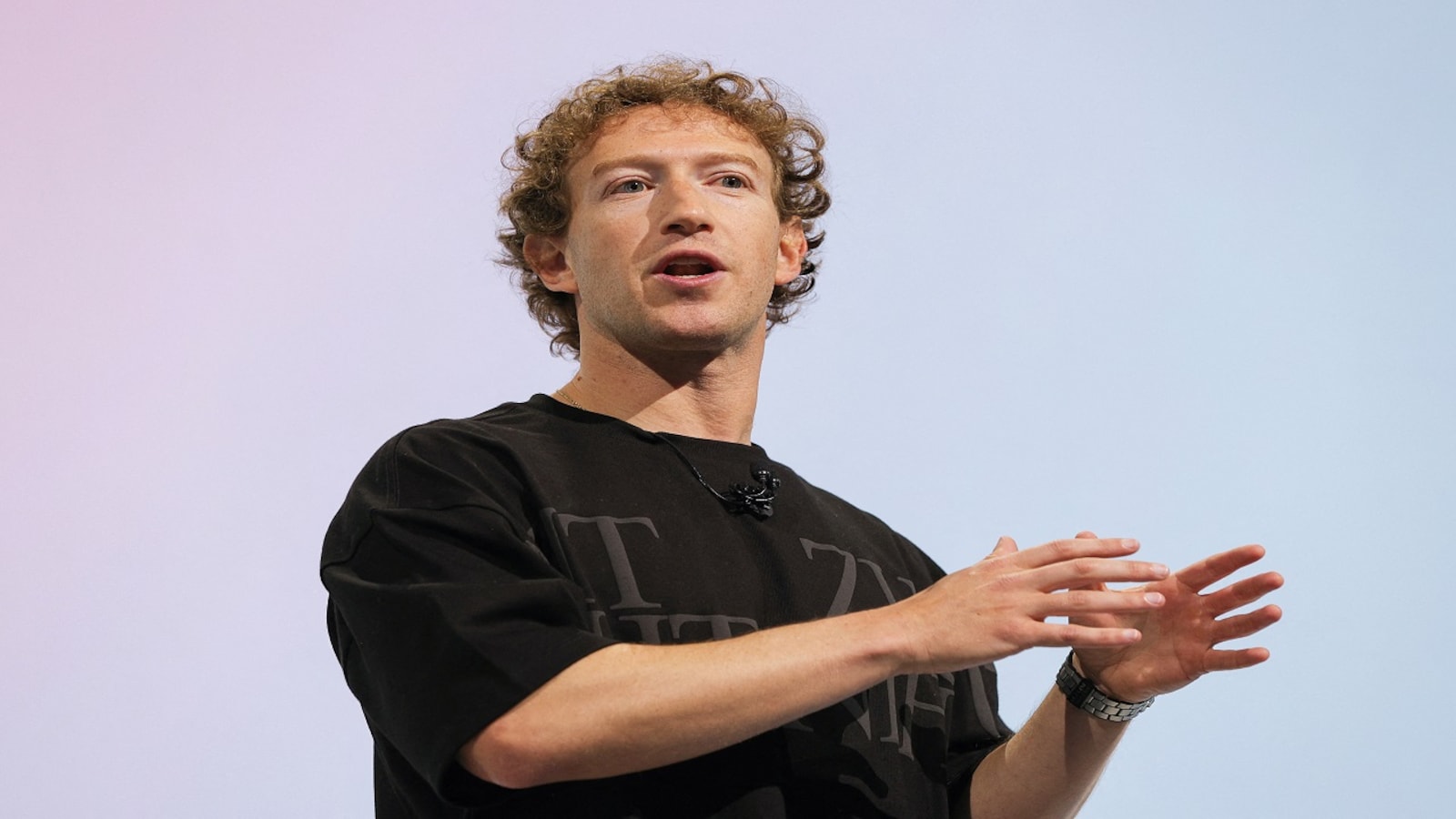
Credits: Moneycontrol
Meta stock records biggest jump in months
Meta shares gained 11.4% on Monday, marking the company’s biggest single-day increase since April 2025. The rally also pushed the stock to its highest closing level since October 2025.
Zuckerberg’s wealth rose rapidly alongside the stock. Forbes estimated that the initial surge added around $12.9 billion to his fortune in the morning. By the middle of the trading session, his estimated gain had reached approximately $25 billion.
Zuckerberg was ranked sixth on Forbes’ Real-Time Billionaires list, around $14.5 billion behind Google co-founder Sergey Brin.
His one-day increase was larger than the wealth gains recorded by other individuals among the world’s 10 richest people, including Elon Musk.
The rally came after Wells Fargo increased its price target for Meta to $796 from $640 while maintaining its “overweight” rating.
Meta’s Muse AI assistant draws investor attention
A key focus for investors has been Muse, Meta’s new AI assistant. The company launched Muse in the US on September 8 as a personal AI assistant designed to perform tasks on behalf of users.
Muse can reportedly help users send emails, book travel, fill out online forms and make purchases. The service is available through its dedicated app and WhatsApp, with Meta working to integrate the assistant more deeply across its wider ecosystem.
The app’s early traction has also attracted attention. Muse reached the top position on Apple’s US App Store, giving investors another indication of consumer interest in Meta’s AI products.
Zuckerberg has previously outlined a long-term vision of building what he calls “personal superintelligence”, in which AI assistants can help individuals accomplish tasks and pursue their goals.
That vision has become an important part of Meta’s broader strategy as the company looks to turn its significant AI investments into consumer-facing products.
Meta Connect puts AI strategy in spotlight
Meta Connect is scheduled to take place on September 23 and 24, with the company expected to provide further details about its AI roadmap.
The event could include updates on Muse, Meta’s AI models and its work on AI-powered wearable devices. The company has been investing heavily in computing infrastructure, including data centres and specialised chips, to support its growing AI ambitions.
However, those investments have also created questions around the returns Meta can generate from its AI spending.
Meta is expected to spend between $130 billion and $145 billion on capital expenditure in 2026, with a substantial portion directed towards AI infrastructure.
For investors, the performance of products such as Muse could therefore provide an early indication of whether Meta’s massive AI investment is translating into consumer adoption and potential revenue opportunities.
Meta pushes AI models beyond the cloud
Meta’s AI strategy extends beyond its consumer assistant.
The company has also introduced Muse Glimmer, an open-weight AI model designed to run locally on consumer hardware rather than depending entirely on cloud-based computing.
Meta says the model can function as an AI agent capable of planning tasks, using tools, evaluating its own results and recovering from failures. The company has described Muse Glimmer as a 30-billion-parameter model capable of running on a single consumer GPU.
Alexandr Wang, Meta’s chief AI officer, has positioned the company’s AI efforts as part of a broader push to bring increasingly capable AI systems directly to consumers.
The approach could give Meta another way to expand its AI ecosystem while reducing reliance on purely cloud-based experiences.

Credits: NewsBytes
AI boom continues to reshape billionaire fortunes
Zuckerberg’s one-day wealth increase highlights how closely the fortunes of major technology billionaires are tied to movements in AI-focused companies.
Google co-founders Larry Page and Sergey Brin have benefited from gains in Alphabet’s stock as investors assess the company’s AI strategy. Other technology billionaires, including Amazon founder Jeff Bezos and Oracle co-founder Larry Ellison, have also seen significant changes in their fortunes amid the AI-driven market rally.
Ellison’s wealth, for instance, briefly increased by a record $89 billion in a single day, at one point moving him ahead of Musk in global wealth rankings.
Meanwhile, rising valuations for AI startups have created new billionaire fortunes. Anthropic’s valuation growth has contributed to the emergence of several new billionaires among its investors and stakeholders.
For Zuckerberg, the latest $25 billion increase underscores the scale of investor expectations surrounding Meta’s AI ambitions. The company’s upcoming Connect event will provide another opportunity for Meta to outline how it plans to turn those investments into products used by billions of people.