A courtroom drama is unfolding that has caught the attention of both food lovers and legal experts. McPatel Foods Pvt Ltd, a homegrown brand from Ahmedabad, is squaring off against global fast-food giant McDonald’s in a trademark battle that’s about more than just branding—it’s about identity, language, and the rights of local businesses.

Credits: The CSR Journal
The Heart of the Dispute: Who Owns “Mc”?
At the centre of this legal face-off is a deceptively simple prefix: “Mc”. McDonald’s argues that this prefix is an essential element of its brand identity—recognisable across the world thanks to offerings like McNuggets, McFlurry, and the McChicken.
But McPatel Foods, best known for its hit snack brand ‘Ohh! Potato’, sees things differently. The Ahmedabad-based company claims the “Mc” in McPatel has cultural and linguistic roots, denoting “son of Patel.” Far from infringing on McDonald’s brand, they argue, the name pays homage to the Patel community, a large and influential group in Gujarat and beyond.
From Mediation to Legal Warfare
Initially, McDonald’s attempted to settle the matter quietly. The multinational initiated mediation proceedings in the Delhi High Court, urging McPatel to drop the “Mc” prefix from its branding. However, the talks failed to bear fruit, with McDonald’s standing firm on its position.
Feeling cornered, McPatel didn’t back down. Instead, it took the battle to court, filing a case in the Ahmedabad rural court under Section 142 of the Trademark Act, which allows a party to seek protection from baseless legal threats. In doing so, McPatel positioned itself as the aggrieved party, arguing that McDonald’s attempts to enforce exclusive rights over a commonly used prefix were unjustified.
The court has already issued a notice to McDonald’s, with the next hearing slated for late July. Legal experts believe this could become a landmark case with implications beyond just the two companies.
The Bigger Picture: Trademark Law vs Cultural Identity
Trademark disputes like this are not new. McDonald’s has a history of aggressively defending the “Mc” prefix globally. But this case stands out because it tests the limits of trademark protection in a diverse, multicultural country like India.
According to McPatel’s legal team, “Mc” is too culturally rooted and generic to be monopolized by a single company. They compare it to surnames and prefixes that are widely used and have broad cultural importance, such as “Shri,” “Chaudhary,” or “De.”
A precedent where even generic or culturally relevant prefixes are subject to exclusive corporate control could be established if McDonald’s wins. If McPatel prevails, it might open the door for nearby companies to assert their ownership of distinctive brand names without worrying about facing legal repercussions.
Public Sentiment: A David vs Goliath Story
The case has sparked public sympathy for McPatel, which many view as a small, local player standing up to a powerful multinational. On social media and in business circles, there’s growing debate about how much power global brands should have over language and naming in local markets.
Consumers see McPatel as more than a snack brand—they see it as a symbol of Indian entrepreneurship, fighting to preserve cultural and community identity in the face of corporate homogenisation.
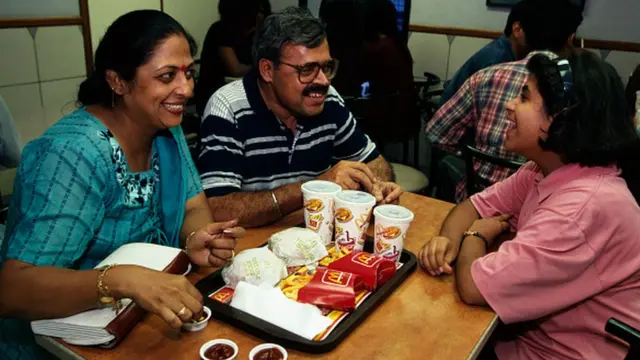
Credits: BBC
What Lies Ahead?
All eyes are on the Ahmedabad court as the next hearing draws near. The decision may change India’s interpretation of trademark protection in situations where there are cultural allusions and common linguistic foundations.
Burgers and French fries are no longer the exclusive topics of discussion. The continuous conflict between local identity and globalization is exemplified by the McPatel v. McDonald’s case. This conflict could influence the rules of the game for years to come in a time when branding is crucial.
This law battle is expected to have a significant impact on India’s legal and branding landscape, regardless of whether “Mc” represents a burger empire or a nod to local roots.