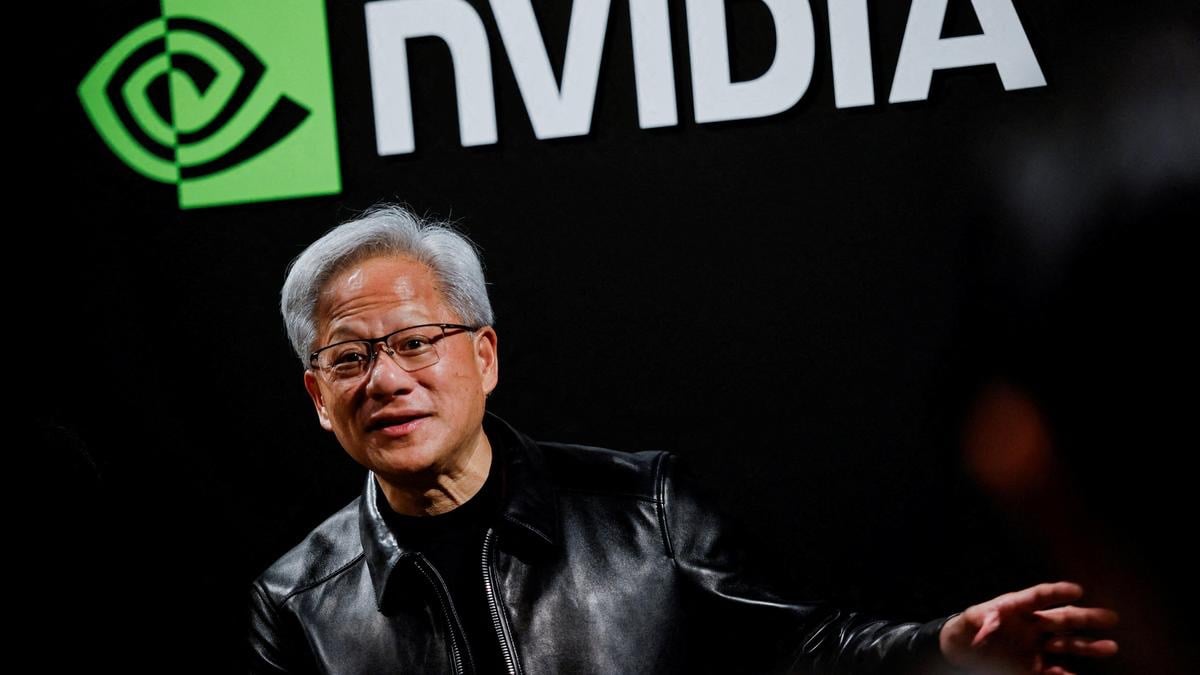
Nvidia has reportedly agreed to acquire Hugging Face, one of the world’s most important platforms for open-source artificial intelligence, in a deal valued at approximately $12.9 billion.
The acquisition would be one of Nvidia’s biggest deals and would mark another major step in the company’s transformation from a semiconductor manufacturer into a dominant force across the entire artificial intelligence ecosystem.
Hugging Face has become a central destination for developers, researchers and companies looking to build, share and deploy AI models. Often described as the “GitHub of AI,” the platform hosts millions of models, datasets and applications and provides tools that developers use to experiment with and deploy artificial intelligence.
For Nvidia, acquiring the platform would mean gaining a much stronger position in the software and developer layer of AI at a time when competition over the technology’s future is intensifying.
From AI Chips to AI Software
Nvidia’s extraordinary rise during the AI boom has largely been powered by its graphics processing units, or GPUs.
Its chips have become essential infrastructure for training and running advanced AI models. Companies developing large language models and other AI systems have spent billions of dollars purchasing Nvidia hardware, making the company one of the biggest beneficiaries of the generative AI revolution.
But Nvidia’s ambitions increasingly extend beyond chips.
The company has been building software, investing in AI startups and developing its own AI models. An acquisition of Hugging Face would take that strategy considerably further by putting Nvidia in control of one of the most important platforms connecting developers with AI models.
Rather than simply supplying the computing power, Nvidia would have a direct role in the environment where developers discover models, experiment with them and prepare them for deployment.
That could give Nvidia influence over a crucial part of the AI development process.
Why Hugging Face Matters
Hugging Face was founded in 2016 by Clément Delangue, Julien Chaumand and Thomas Wolf. What began as a chatbot startup eventually evolved into a massive open-source AI platform.
Its Hugging Face Hub allows developers and researchers to upload and share machine-learning models and datasets. The platform has become particularly important as interest in open-source and open-weight AI has grown.
Instead of relying exclusively on proprietary systems from companies such as OpenAI or Anthropic, developers can use models made available through Hugging Face and modify or fine-tune them for specific applications.
The platform also supports a broad ecosystem of AI tools, libraries and applications.
That makes Hugging Face valuable not simply because of its revenue, but because of the community surrounding it.
Millions of developers interact with the platform, making it an important gateway to the open AI ecosystem.
For Nvidia, that developer community could be as important as the technology itself.
A $12.9 Billion Bet
The reported $12.9 billion valuation represents a huge increase from Hugging Face’s previous valuation.
The company was valued at approximately $4.5 billion following a major funding round in 2023, in which Nvidia was among the investors.
Hugging Face’s annualised revenue has reportedly reached around $150 million, meaning Nvidia would be paying a very large multiple of the company’s current revenue.
That suggests the chipmaker isn’t buying Hugging Face because of its existing financial performance alone.
Instead, Nvidia appears to be paying for its strategic importance.
The value lies in the company’s developer network, its enormous collection of models and datasets, its software tools and its position at the centre of the open-source AI ecosystem.
The acquisition would effectively give Nvidia access to a platform that developers already use to decide which AI models and tools they want to work with.
Nvidia Faces a Changing AI Landscape
The deal also comes as Nvidia faces a potential long-term challenge to its dominance.
Major technology companies are increasingly developing their own AI chips.
Google has its TPU accelerators, Amazon has developed its own AI processors, and companies including OpenAI and Anthropic have shown increasing interest in custom silicon.
The motivation is clear: companies want greater control over their AI infrastructure and want to reduce their dependence on Nvidia.
If more AI workloads eventually move to competing chips, Nvidia’s position could weaken.
Open-source AI provides an important strategic opportunity.
Open models are used across a wide range of computing environments, and Nvidia can benefit when developers choose its GPUs to train or run those models.
By owning Hugging Face, Nvidia could potentially strengthen the relationship between open-source developers and its hardware ecosystem.

The Open-Source Question
However, the acquisition could also create a significant problem.
Hugging Face’s strength comes partly from its neutrality.
The platform hosts models and tools associated with numerous companies and hardware manufacturers. Developers can use it regardless of whether they prefer Nvidia, AMD, Intel, Google or another technology provider.
Nvidia ownership could raise concerns about whether that neutrality would survive.
Developers could worry that Nvidia might prioritise its own models, tools or hardware.
That could undermine the trust that helped make Hugging Face successful in the first place.
The situation would be similar to a company owning an important piece of infrastructure used by competitors. The owner has an opportunity to strengthen its own ecosystem, but pushing too aggressively could encourage users to look elsewhere.
For Nvidia, preserving Hugging Face’s independence and open character could therefore be critical to making the acquisition successful.
A Hedge Against OpenAI and Anthropic
The acquisition also has implications for the competition between open and closed AI.
OpenAI and Anthropic have built powerful proprietary models and are among the companies most heavily associated with the closed-model approach.
Both are also exploring ways to develop more of their own infrastructure.
Nvidia’s interest in Hugging Face could therefore be seen as a hedge.
If closed AI companies eventually reduce their dependence on Nvidia hardware, the company would still have a powerful position in the open-model ecosystem.
Hugging Face could become an important distribution and development layer connecting open AI models with Nvidia’s broader hardware and software stack.
Nvidia’s Bigger AI Strategy
The acquisition demonstrates how Nvidia is attempting to become more than the company that sells the chips powering the AI revolution.
The company increasingly wants to participate at every level of the ecosystem — from data-centre hardware and networking to software, models, developers and applications.
Hugging Face fits neatly into that strategy.
The platform gives Nvidia access to developers before their AI workloads are ultimately deployed. If Nvidia can make its hardware, software and AI tools easier to use within that ecosystem, the company could strengthen its position for years to come.
But the deal also carries risks.
The $12.9 billion price is enormous, and the acquisition could face scrutiny over competition and the future of open-source AI. More importantly, Nvidia will have to convince Hugging Face’s global developer community that the platform will remain open and useful to everyone.
The acquisition therefore represents much more than another technology takeover.
It is a bet on who will control the infrastructure of the AI economy.
Nvidia already dominates the chips. With Hugging Face, it could gain a powerful foothold in the world of open-source models and developers.
The biggest question now is whether Nvidia can own one of the most important platforms in open AI without changing the very openness that made it valuable in the first place.