
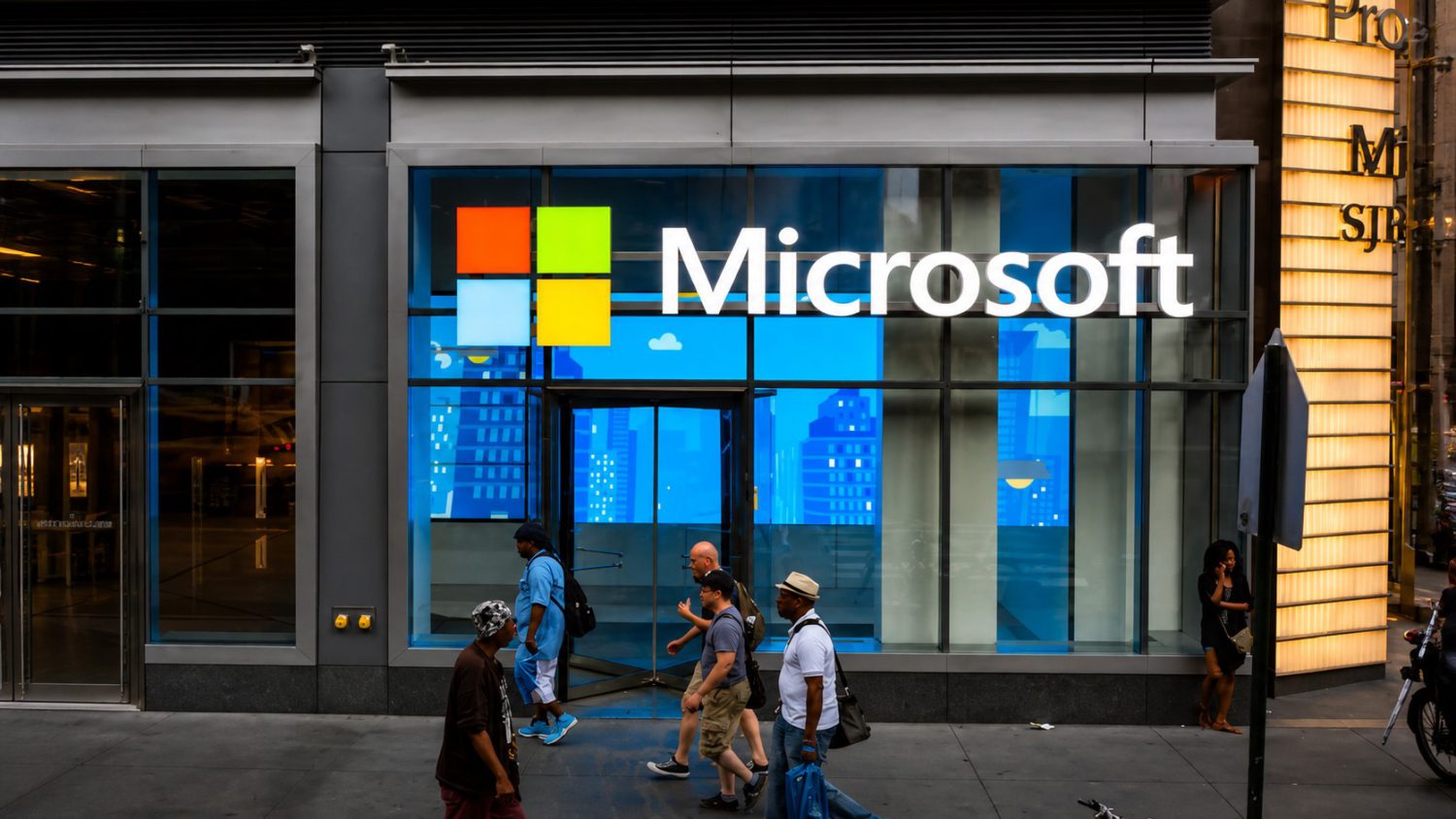
Microsoft is taking a closer look at how its employees use artificial intelligence after one worker reportedly consumed around $28,000 worth of AI resources in just 28 days.
The extraordinary figure has exposed a new challenge for companies that have spent the past few years encouraging employees to use AI as extensively as possible. While generative AI can dramatically improve productivity, unrestricted access to powerful models can also create unpredictable computing costs.
Microsoft’s response has been to introduce closer monitoring of AI consumption, including token budgets and greater visibility into usage. The company is also shifting some internal AI workloads to GPT-5.6 Sol as its default model, in an effort to extract more value from the tokens employees consume.
The incident illustrates how the AI boom is entering a new phase. Companies are no longer simply asking employees to use artificial intelligence. They are beginning to ask whether that usage is actually worth the cost.
A $28,000 AI Bill
The $28,000 figure comes from an internal Microsoft spreadsheet in which employees voluntarily report information about compensation, bonuses, stock awards and other workplace data. A new column added this year allows employees to report the estimated dollar value of the AI tools they have used during a 28-day period.
Around 350 US-based employees had reported their AI usage when the data was examined. The median reported usage was approximately $300 for the 28-day period.
The highest figure, however, was dramatically different.
An employee in Microsoft’s Customer and Partner Solutions organisation reportedly recorded approximately $28,000 in AI usage over the same period.
The number should not be interpreted as an employee personally paying Microsoft $28,000. Instead, it represents the estimated value of the computing resources and AI tokens consumed through Microsoft’s internal tools.
The data is also not a complete picture of Microsoft’s workforce. Participation was voluntary, and the company has more than 223,000 employees globally. Nevertheless, the enormous gap between typical usage and the highest reported figure highlights how differently employees can consume AI resources.
Some employees reportedly recorded AI usage worth more than $10,000 during the period, demonstrating that the $28,000 figure was not the only instance of unusually heavy consumption.
The Rise of ‘Tokenmaxxing’
The spending problem became even more complicated as employees began paying attention to how much AI they were using.
The phenomenon has been described as “tokenmaxxing” — essentially treating AI token consumption as a measure of productivity.
Tokens are the basic units processed by large language models. The more complex or lengthy an interaction is, the more tokens an AI system may consume. For companies running AI at scale, token consumption can translate directly into significant computing costs.
Microsoft’s internal AI dashboards reportedly made usage visible to employees, creating an environment where high consumption could become something of a status symbol.
Some employees allegedly began deliberately increasing their token usage, including through low-value or unnecessary queries.
The problem was obvious: high AI consumption does not necessarily mean high productivity.
An engineer could use millions of tokens to solve a difficult software problem and generate substantial value for the company. Another employee could consume the same number of tokens through repetitive prompts without producing anything meaningful.
If token usage becomes a target rather than a measurement, employees may naturally optimise for the number rather than the outcome.
Microsoft Wants Results, Not Tokens
Microsoft’s leadership has reportedly pushed back against the idea that employees should simply maximise AI usage.
The company wants workers to focus on outcomes — whether AI helps build products faster, solve problems, improve software or deliver better results for customers.
That distinction is becoming increasingly important as companies attempt to calculate the return on their AI investments.
For years, businesses have treated AI adoption as a race. Employees were encouraged to experiment with Copilot, coding assistants and other generative AI tools. The assumption was that greater adoption would eventually translate into greater productivity.
But AI usage has a cost.
Unlike traditional software subscriptions, AI expenses can vary considerably depending on how frequently a tool is used, the complexity of the task, the length of conversations and the model being accessed.
A single employee using AI agents continuously can therefore generate a vastly larger computing bill than another employee performing a handful of simple tasks.
Token Budgets Enter the Workplace
Microsoft’s response is reportedly centred around greater control over token consumption.
The company has begun introducing token budgets for divisions, giving teams a clearer understanding of how much AI computing they are consuming.
This represents an important change in the way Microsoft approaches workplace AI.
Instead of treating AI as an unlimited resource, the company is beginning to manage it more like cloud infrastructure. Teams need to understand what they are consuming, why they are consuming it and whether the results justify the expense.
That does not necessarily mean Microsoft wants employees to stop using AI.
Instead, the company appears to be moving toward more selective usage, where employees choose the right AI model and the appropriate amount of computing power for a particular task.
Why GPT-5.6 Sol Is Becoming the Default
Model selection is another part of Microsoft’s effort to control AI costs.
The company has reportedly shifted internal workloads toward GPT-5.6 Sol as its default model for certain AI workflows, including those connected to coding and GitHub Copilot.
The reasoning is relatively straightforward. Not every task requires the most expensive or computationally intensive model available.
A simple summarisation task does not necessarily need the same resources as complex software development or advanced reasoning. Using an appropriate model for each task can reduce costs while still delivering the desired result.
Microsoft’s shift therefore reflects a broader trend in enterprise AI: companies are beginning to optimise not just for model performance, but for the relationship between performance and cost.
AI’s Corporate Reckoning
The $28,000 incident comes at a time when Microsoft is among the companies investing most aggressively in artificial intelligence.
The company has poured enormous resources into AI infrastructure, models and products while encouraging employees to integrate AI into their daily work.
But the incident demonstrates the other side of that strategy.
AI adoption can be expensive when employees are given access to powerful models without meaningful controls. And when companies attempt to measure AI adoption through usage statistics, they can inadvertently create incentives for employees to maximise consumption rather than productivity.
Microsoft’s experience could become a warning for other businesses following the same path.
The next stage of enterprise AI may therefore be less about convincing employees to use artificial intelligence and more about teaching them to use it intelligently.
The $28,000 figure is an extreme outlier, but it raises a much bigger question for the corporate world: If AI is supposed to make employees more productive, how much should companies be willing to spend to achieve that productivity?
For Microsoft, the answer increasingly appears to involve tracking every token, setting limits and choosing models more carefully.
The era of unlimited AI experimentation may be coming to an end. The new priority is simple: use AI more effectively, not simply more.