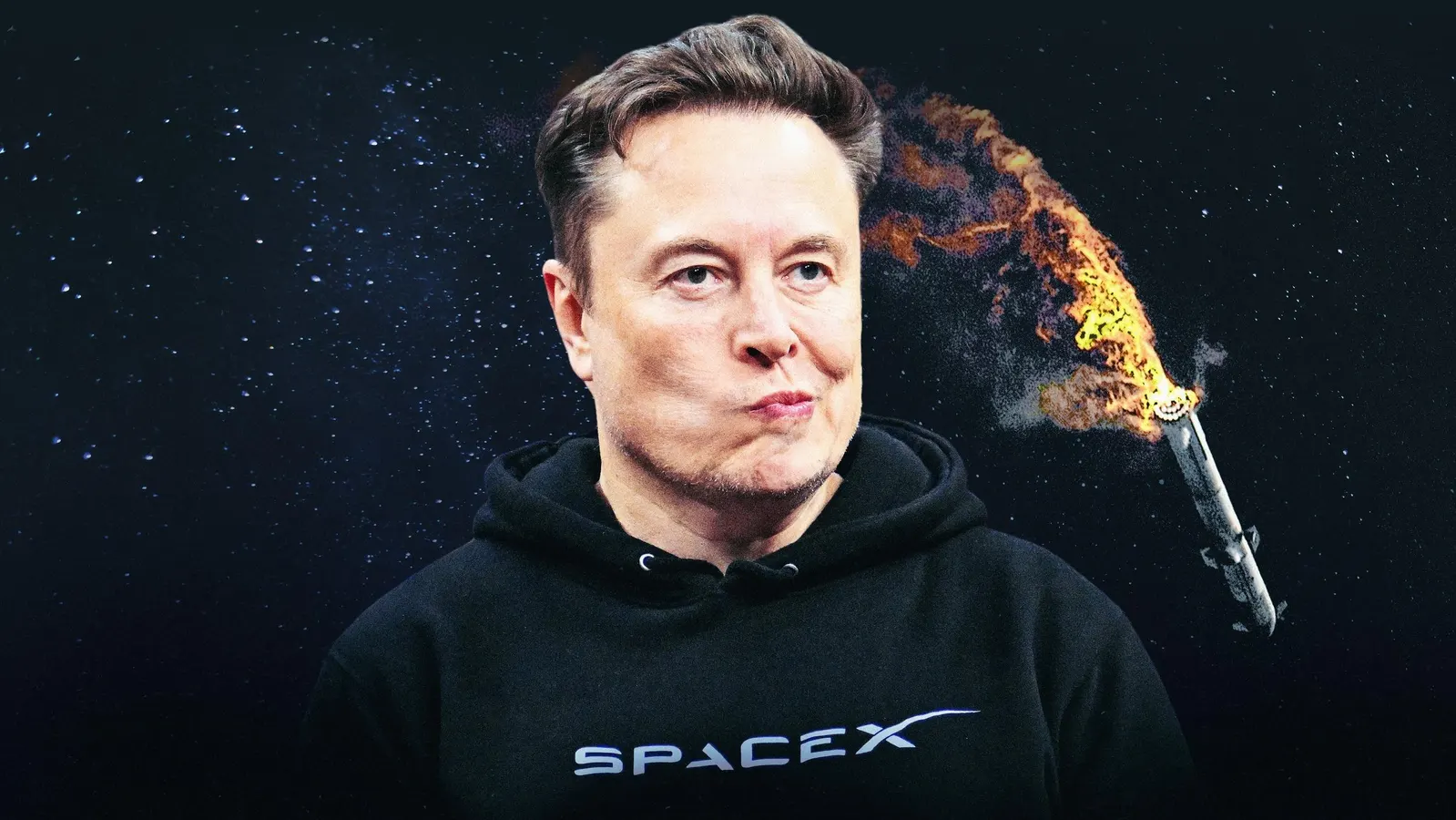
For years, SpaceX was known as the company that revolutionized space travel with reusable rockets and ambitious plans to send humans to Mars. But in 2025, the company’s financial story reveals a surprising reality: SpaceX is no longer primarily a rocket company. Instead, satellite internet service Starlink has emerged as the dominant force behind its revenue, while artificial intelligence is rapidly becoming a major pillar of its future.
Following its blockbuster IPO, which valued the company at approximately $1.77 trillion, SpaceX has cemented its position among the world’s most valuable companies. Yet behind the headlines lies a fascinating transformation of its business model.

Credits: Reuters
Starlink Powers the Business
The biggest contributor to SpaceX’s revenue is Starlink, its satellite internet network. In 2025, Starlink accounted for nearly 70% of the company’s total revenue, generating an estimated $13 billion out of SpaceX’s $18.67 billion in annual sales.
What started as an ambitious project to provide internet access to remote areas has evolved into a global connectivity powerhouse. With roughly 10.3 million users and around 9,600 satellites in orbit, Starlink serves households, businesses, airlines, ships, and government agencies around the world.
The appeal of Starlink lies in its recurring subscription revenue. Unlike rocket launches, which occur periodically, internet subscribers generate predictable monthly income. This steady cash flow has transformed Starlink into the financial backbone of SpaceX and provides the resources needed to fund the company’s more ambitious ventures.
Rockets Remain the Foundation
Despite being SpaceX’s most recognizable business, rockets contributed only about 13% of total revenue in 2025, generating approximately $2.46 billion.
That figure may seem modest, but SpaceX continues to dominate the global launch market. The company has achieved a launch cadence unmatched by its competitors, conducting more than two launches per week on average. Its Falcon 9 rocket remains the industry’s workhorse, delivering satellites, cargo, and astronauts into orbit.
Meanwhile, Falcon Heavy continues to serve specialized missions, particularly for military and deep-space exploration projects. The next-generation Starship system, currently under development, represents SpaceX’s long-term vision for large-scale cargo transport, lunar missions, and eventual journeys to Mars.
While launch services may represent a smaller portion of revenue today, they remain strategically critical to the company’s broader ecosystem.
The Growing Importance of AI
Perhaps the most intriguing part of SpaceX’s transformation is its growing focus on artificial intelligence. Following the integration of Elon Musk’s AI venture, xAI, the segment contributed roughly 17% of total revenue, or about $3.25 billion.
The move reflects Musk’s belief that AI represents one of the largest economic opportunities of the coming decades. By combining AI capabilities with SpaceX’s satellite infrastructure, the company hopes to create powerful new services and applications that extend far beyond traditional space operations.
However, growth comes at a cost. Massive investments in computing infrastructure, data centers, and AI model development have significantly increased expenses, making profitability a challenge despite strong revenue growth.
Revenue Soars, But Losses Return
SpaceX’s revenue climbed 33% year-over-year to reach $18.67 billion in 2025. Under normal circumstances, such growth would likely lead to soaring profits.
Instead, the company reported a net loss of approximately $4.94 billion. The primary reason was aggressive spending on AI development and the continued investment required to build and test Starship.
Just a year earlier, SpaceX had reported a profit of nearly $800 million. The sharp reversal highlights the company’s willingness to sacrifice short-term earnings in pursuit of long-term technological leadership.

Credits: Barron’s
A New Kind of Space Company
SpaceX’s evolution illustrates how dramatically the company has changed. It is no longer simply a rocket manufacturer competing for launch contracts. Today, it is a diversified technology giant built around satellite connectivity, space infrastructure, and artificial intelligence.
Starlink provides the revenue engine, rockets provide the technological foundation, and AI represents the next frontier. Together, these businesses are shaping a company that aims not only to dominate space but also to play a major role in the future of global communications and artificial intelligence.
As SpaceX enters its next chapter as a public company, investors will be watching closely to see whether its massive bets on AI and Starship can eventually deliver returns as impressive as its rockets.