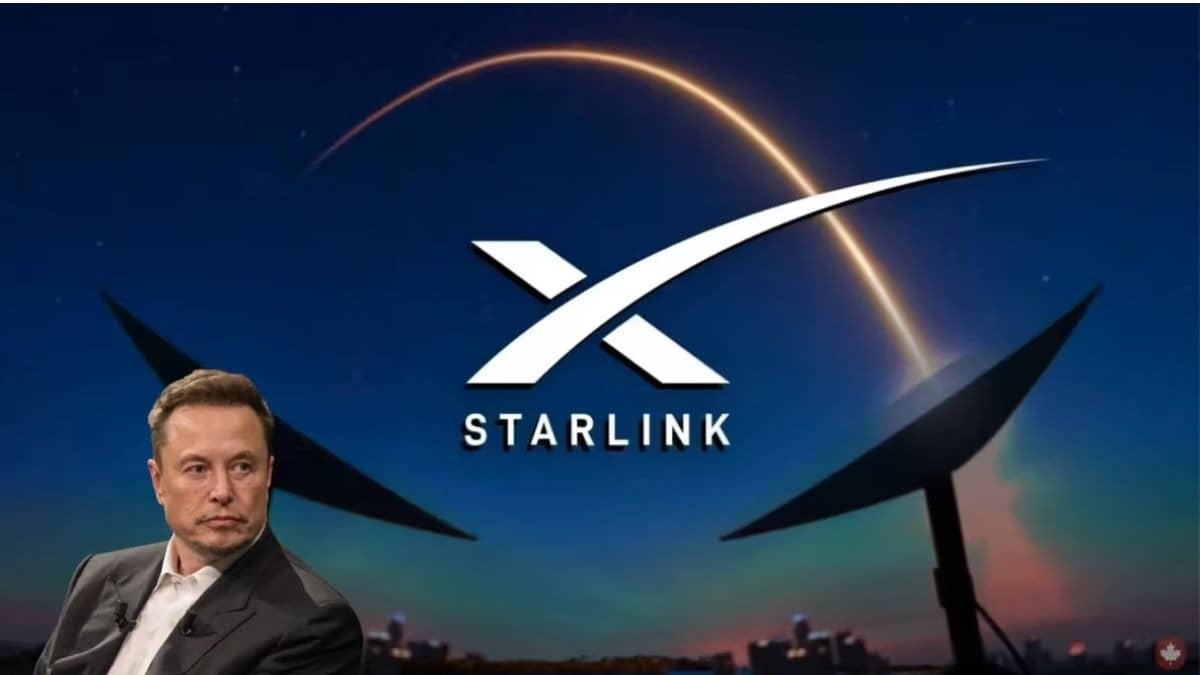
Elon Musk’s satellite internet venture, Starlink, has received provisional spectrum clearance from India’s Department of Telecommunications (DoT). This approval allows the company to begin trial satellite broadband services, marking a significant milestone in its long-awaited entry into one of the world’s largest internet markets.
With this clearance, Starlink is now ready to build ground infrastructure, set up base stations, and conduct security compliance tests—all prerequisites before a commercial rollout.
Credits: Republic World
Building the Backbone: Mumbai at the Core
According to sources, Starlink will establish 10 ground stations across India, with Mumbai as the central hub. These earth stations are critical for routing satellite communications within the country.
In compliance with Indian regulations, all satellite traffic must pass through domestic gateways and cannot be decrypted or routed outside India. This ensures both data security and sovereignty, a key priority for the government.
Starlink has already applied for an import license to bring in essential equipment, including landing station hardware, and has outsourced the building of its Mumbai gateway to Equinix, a global data center services provider.
From Licence to Launch: The GMPCS Approval
Earlier this year, Starlink secured a Global Mobile Personal Communication by Satellite (GMPCS) licence, joining rivals such as Eutelsat OneWeb and Jio Satellite (Orbit Connect India). The GMPCS licence is mandatory for satellite operators looking to provide broadband services in India.
Crucially, Starlink has also accepted the strict security requirements outlined in its Letter of Intent (LoI). These include the commitment to keep Indian traffic within domestic gateways—one of the government’s key conditions for approval.
A Phased Rollout Targeting Underserved Regions
Starlink is aiming for a phased rollout, with the first priority being underserved and remote areas that lack reliable broadband access. If things go as planned, commercial services could launch by December 2025, pending final spectrum allocation.
To streamline onboarding, the company has also partnered with UIDAI to enable Aadhaar-based customer verification, ensuring regulatory compliance and simplifying the user sign-up process.
This marks a major comeback for the company, which in 2021 was ordered to refund pre-orders in India after collecting bookings without securing approvals.
Spectrum Pricing: The Big Question Mark
While provisional spectrum has been granted for trials, the pricing and allocation of commercial spectrum is still unresolved. The Digital Communications Commission (DCC) is expected to submit recommendations to the Telecom Regulatory Authority of India (TRAI), after which formal allocation will be finalized.
The issue is contentious. In May 2025, TRAI proposed a 4% adjusted gross revenue (AGR) usage fee for satellite operators, including Starlink, OneWeb, and Jio Satellite. However, private telecom operators have strongly opposed this proposal, arguing it could create an uneven playing field.
The government has yet to announce a final decision, with Minister of State for Communications Chandra Sekhar Pemmasani confirming that deliberations are ongoing.
Starlink and the Competition
Starlink enters a competitive space where Eutelsat OneWeb and Jio-SES joint venture Orbit Connect India are already preparing for commercial services. Both companies hold GMPCS licenses and were granted a six-month extension until November 2025 to use provisional spectrum while aligning with newly issued security guidelines.
With multiple players vying for the same market, India’s satellite broadband space is shaping up to be a battleground for global and domestic giants.
Credits: Starlink
What This Means for India
If Starlink manages to clear the regulatory and spectrum hurdles, its entry could be a game-changer for rural and remote India, where terrestrial networks have long struggled. Satellite broadband has the potential to bridge the digital divide, opening access to education, healthcare, and digital services for millions.
At the same time, the final decision on spectrum pricing will determine whether India can balance affordability for consumers with fair competition among service providers.