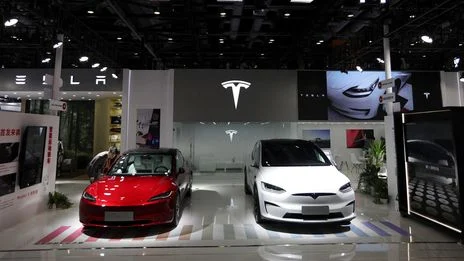
Tesla is no longer the EV king of Europe. After dominating sales charts for years, the American automaker has slipped to second place in the first half of 2025, posting a sharp 33% drop in sales across the European Union, EFTA markets, and the United Kingdom. According to preliminary figures from Data Force, Tesla’s grip on the region is weakening.
Meanwhile, Volkswagen, the brand, not the wider group, has made a commanding comeback, selling 133,465 electric vehicles between January and June. That’s a staggering 78% increase year-over-year, allowing the German giant to comfortably surpass Tesla’s 108,878 units.
Legacy Brands Gain Momentum
Tesla’s downturn wasn’t isolated; it coincided with a strong rally by Europe’s traditional automakers. BMW secured the third spot with 93,576 units sold, marking a 14% rise from last year. But the biggest surprise came from Skoda, which posted a jaw-dropping 146% increase, selling 70,947 EVs in the same period, powered by the strong demand for its Elroq and refreshed Enyaq models.
Renault also enjoyed a resurgence, growing its EV sales by 58% to 63,704 units fueled largely by the buzz surrounding the retro-styled Renault 5.
Here’s how the top five shaped up for H1 2025:
| Rank | Brand | H1 2025 Sales | YoY Growth |
|---|---|---|---|
| 1 | Volkswagen | 133,465 | +78% |
| 2 | Tesla | 108,878 | -33% |
| 3 | BMW | 93,576 | +14% |
| 4 | Skoda | 70,947 | +146% |
| 5 | Renault | 63,704 | +58% |

Tesla’s Challenges Persist
Tesla CEO Elon Musk had earlier promised a “major rebound” in global demand following factory shutdowns for tooling upgrades—largely to accommodate the new Model Y. While Tesla did reclaim the top-selling EV spot for June alone in Europe, it wasn’t enough to offset the earlier slump. Even in June, the company was the only one among the top five to see a sales decline, dropping 21% year-over-year with 32,605 cars sold.
In contrast, Volkswagen saw a 9% uptick, BMW rose by 16%, Renault climbed 23%, and Skoda soared by 189% during the same month.
Model Y Still Dominates, But It’s Not Enough
Despite the overall downturn, Tesla’s Model Y and Model 3 remained the two best-selling EVs in Europe during the first half of the year. They were followed by the Volkswagen ID.4, ID.7, and ID.3—highlighting that while Tesla’s brand still resonates, competition is catching up fast.
EV Market Grows, Tesla Shrinks
The broader context? The European EV market itself is growing fast. Total EV sales across the region jumped 24% year-over-year, rising from 944,858 units in H1 2024 to 1,177,051 units in H1 2025. So while others are riding the wave, Tesla is swimming against the current.
The Road Ahead
Tesla’s European stumble underscores a shift in momentum. Legacy automakers like Volkswagen, BMW, Skoda, and Renault are no longer playing catch-up—they’re setting the pace. For Tesla, the next six months will be critical. New model launches, pricing strategies, and production stability will need to come together quickly if the company wants to avoid falling further behind in what is now the world’s most competitive EV market.