• Send Us A Tip
  • Calling all Tech Writers
  • Advertise
Monday, June 22, 2026
  • Login
TechStory
  • News
  • Crypto
  • Gadgets
  • Memes
  • Gaming
  • Cars
  • AI
  • Startups
  • Markets
  • How to
No Result
View All Result
  • News
  • Crypto
  • Gadgets
  • Memes
  • Gaming
  • Cars
  • AI
  • Startups
  • Markets
  • How to
No Result
View All Result
TechStory
No Result
View All Result
Home Cars

Volvo EX90: Cutting-Edge Tech or Cutting Corners? Customers to Receive Electric SUV with Missing Features

by Samir Gautam
June 30, 2024
in Cars, Electric Vehicles
Reading Time: 3 mins read
0
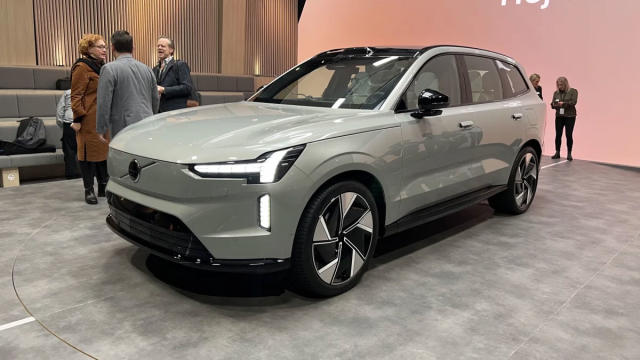
2025 Volvo EX90 Will Reach Customers With Missing Features
TwitterWhatsappLinkedin

The highly anticipated 2025 Volvo EX90, Volvo’s first electric SUV, has hit a speed bump on the road to dealerships. While the car boasts impressive technology and a focus on safety, a recent announcement by Volvo revealed that the EX90 will be delivered to customers with several key features missing.

You might also like

How Long Do Honda Civics Last? Why the Compact Sedan Still Has a Long-Life Reputation

Mitsubishi Hints at a Future Worthy of the Lancer Evolution Legacy

How to Increase Gas Mileage: Small Driving Changes That Save Big at the Pump

These missing features include:

  • Driver-assistance features: The EX90 will lack some of its driver-assistance suite, including the crucial cross-traffic alert with automatic braking. This feature can be essential for safety, especially in crowded urban environments.
  • Connectivity features: Tech-savvy drivers will be disappointed to learn that wireless Apple CarPlay won’t be available at launch. While wired CarPlay will still be functional, the convenience of a wireless connection is a major selling point for many.
  • Energy efficiency features: The bi-directional charging system, allowing the EX90 to power external devices or even another electric car, will be absent initially. This feature is a potential game-changer for eco-conscious consumers looking to maximize the car’s functionality.
  • Infotainment limitations: Aesthetics may seem trivial, but some might find the lack of a light theme for the infotainment and driver displays a turn-off. While a future update promises to address this, early adopters will be stuck with the dark theme for the foreseeable future.
  • Battery drain concerns: Perhaps the most concerning missing feature is related to battery efficiency. Volvo acknowledges that the EX90 may experience a 3% daily battery drain when parked and not in use. This “phantom drain” could significantly impact the car’s overall range.

Volvo assures customers that most of these missing features will be added later via over-the-air (OTA) software updates. However, this approach raises concerns for some potential buyers.

Is the Future of Cars Here, or Still Under Construction?

The reliance on OTA updates for core functionalities is a relatively new trend in the auto industry. While it offers flexibility and the potential for continuous improvement, it also presents challenges.

  • Safety Concerns: The delay of safety features like automatic emergency braking is a significant concern. Until the update arrives, drivers won’t have access to the full suite of safety features advertised.
  • Uncertain Update Timeline: Volvo hasn’t provided a concrete timeline for when these features will be available through software updates. This leaves customers wondering how long they’ll have to wait for the complete EX90 experience.
  • Feature Functionality: There’s always a chance that OTA updates might not go smoothly. Bugs or technical issues could delay or hinder the functionality of the added features.

Defenders of the EX90 Approach point to several advantages:

  • Improved Efficiency: OTA updates allow Volvo to continuously improve the EX90’s software and potentially optimize features for better performance or battery efficiency.
  • Future-Proofing: The car’s software can stay up-to-date with the latest advancements, ensuring the EX90 remains relevant for years to come.
  • Cost Benefits: Developing and integrating all features at launch can be expensive. The OTA update approach allows Volvo to prioritize core functionalities and deliver the car sooner, potentially at a more competitive price point.

The Verdict: Early Adopters Beware

The 2025 Volvo EX90 presents a compelling package for environmentally-conscious drivers seeking a luxurious electric SUV. However, the lack of certain features at launch, particularly some safety features, is a cause for concern.

While OTA updates offer a solution, the waiting period and potential for technical glitches add uncertainty.

Those who prioritize having all the advertised features readily available might be better off waiting for a later model year or considering alternative electric SUV options.

For early adopters willing to embrace the cutting edge, with a dash of patience, the EX90 could still be a tempting proposition. But they should be fully aware of the features that will be missing and the reliance on future software updates to get the complete EX90 experience.


Tags: VolvoVolvo EX90
Tweet56SendShare16
Previous Post

Toyota GR86 Finally Gets Turbo, Ends Subaru Partnership

Next Post

Maximize Your Output: Tap into ChatGPT Settings for an Instant Productivity Boost

Samir Gautam

Recommended For You

How Long Do Honda Civics Last? Why the Compact Sedan Still Has a Long-Life Reputation

by Samir Gautam
June 21, 2026
0
Honda Civic lifespan guide

The Honda Civic has spent decades building a reputation as one of the safest bets in the compact-car market. It is affordable to run, easy to live with...

Read more

Mitsubishi Hints at a Future Worthy of the Lancer Evolution Legacy

by Samir Gautam
June 21, 2026
0
Mitsubishi Hints at a Future Worthy of the Lancer Evolution Legacy

Mitsubishi Motors has reignited hopes among performance-car fans after its new president said the company wants to become capable of building another great car in the mould of...

Read more

How to Increase Gas Mileage: Small Driving Changes That Save Big at the Pump

by Samir Gautam
June 21, 2026
0
Fuel prices may rise and fall, but one thing stays constant: drivers want to make every litre go further. The good news is that improving gas mileage does not always require buying a new hybrid or changing cars altogether. A few disciplined habits behind the wheel, along with basic maintenance, can make a noticeable difference over time. For most drivers, the biggest gains come from reducing waste. That means less aggressive acceleration, fewer unnecessary trips, correctly inflated tyres and a car that is mechanically healthy. Smooth Driving Uses Less Fuel The quickest way to burn more fuel is to drive as if every traffic light is a starting grid. Hard acceleration, sharp braking and sudden changes in speed force the engine to work harder and consume more petrol. A smoother approach works better. Accelerate gradually, maintain a steady speed where possible and look ahead to anticipate traffic. If a red light is visible in the distance, easing off the accelerator early is usually more efficient than rushing forward and braking hard at the last moment. Speed also matters. As speeds rise, aerodynamic drag increases and the engine needs more energy to keep the vehicle moving. On highways, staying within a sensible cruising range rather than constantly pushing at high speeds can help reduce fuel consumption. Check Tyre Pressure Regularly Tyres are easy to ignore until something goes wrong, but they play a major role in fuel economy. Under-inflated tyres create more rolling resistance, which means the engine has to use more fuel just to move the car forward. Drivers should check tyre pressure at least once a month, preferably when the tyres are cold. The correct pressure is usually listed on the driver-side door frame or in the owner’s manual. It is important not to use the maximum pressure printed on the tyre sidewall as a target. That figure is not necessarily the recommended setting for the vehicle. The US Environmental Protection Agency notes that under-inflation reduces fuel economy, increases tyre wear and adds to emissions. Stop Carrying Extra Weight A car is not a storage room. Heavy items in the boot may seem harmless, but extra weight makes the engine work harder, especially in city traffic where the vehicle is constantly stopping and starting. Clear out unnecessary tools, boxes, sports gear and other items that have been sitting in the car for weeks. Roof racks and cargo boxes can also hurt mileage by increasing aerodynamic drag. If they are not being used, remove them. This is especially relevant for drivers who spend most of their time on highways, where wind resistance becomes a bigger factor. Keep Up With Maintenance A well-maintained vehicle is usually a more fuel-efficient vehicle. Delayed oil changes, worn spark plugs, clogged air filters, dragging brakes and poor wheel alignment can all affect how efficiently a car runs. Following the manufacturer’s service schedule is the safest route. Use the recommended engine oil grade and get warning lights checked instead of ignoring them. A sudden drop in mileage can be an early sign that something needs attention. The EPA advises motorists to follow their vehicle maintenance schedule and use the recommended motor oil to support better fuel efficiency and safer operation. Combine Trips and Avoid Long Idling Short trips can be surprisingly fuel-hungry because the engine has not had enough time to reach its most efficient operating temperature. Combining errands into one planned route can reduce cold starts, unnecessary kilometres and fuel use. Idling is another quiet fuel drain. If you are waiting for an extended period, switching off the engine can be more sensible than leaving it running. Modern cars do not need long warm-up periods before driving. Start, settle for a few seconds and drive gently. The Bottom Line Better gas mileage is less about one miracle trick and more about consistent habits. Drive smoothly, maintain the right tyre pressure, remove excess weight and service the car on time. These small changes may not feel dramatic on a single trip, but over months of commuting, school runs and highway drives, they can add up to real savings.

Fuel prices may rise and fall, but one thing stays constant: drivers want to make every litre go further. The good news is that improving gas mileage does...

Read more
Next Post
OpenAI researchers warn of 'catastrophic harm' after the company opposes the AI safety bill

Maximize Your Output: Tap into ChatGPT Settings for an Instant Productivity Boost

Please login to join discussion

Techstory

Tech and Business News from around the world. Follow along for latest in the world of Tech, AI, Crypto, EVs, Business Personalities and more.
reach us at info@techstory.in

Advertise With Us

Reach out at - info@techstory.in

Aviator Game India 2026

BROWSE BY TAG

#Crypto #howto 2024 acquisition AI amazon Apple Artificial Intelligence bitcoin Business China cryptocurrency e-commerce electric vehicles Elon Musk Ethereum facebook funding Gaming Google India Instagram Investment ios iPhone IPO Market Markets Meta Microsoft News OpenAI samsung Social Media SpaceX startup startups tech technology Tesla TikTok trend trending twitter US

© 2025 Techstory.in

No Result
View All Result
  • News
  • Crypto
  • Gadgets
  • Memes
  • Gaming
  • Cars
  • AI
  • Startups
  • Markets
  • How to

© 2025 Techstory.in

Welcome Back!

Login to your account below

Forgotten Password?

Retrieve your password

Please enter your username or email address to reset your password.

Log In
Are you sure want to unlock this post?
Unlock left : 0
Are you sure want to cancel subscription?