MUMBAI There’s a robot named Elle at Larsen & Toubro’s new museum in Powai. She greets visitors, zips around on wheels, and probably has more computing power than your laptop. But here’s the thing nobody tells you: someone needs to make sure Elle and her dozens of high-tech friends don’t crash in the middle of impressing a VIP.
That someone, or rather that something, is a piece of software called Fuild. And it was built by Karishma Mandal, who currently serves as the Chief Technology Officer at Shree Commercial Interiors.
Now, if you’re not the kind of person who gets excited about infrastructure monitoring, here’s why Fuild matters: it takes all the incomprehensible data that computers spit out and turns it into something a normal human being can look at without wanting to lie down.
You know how, when your computer acts up, you open Task Manager and see a bunch of numbers and graphs that mean absolutely nothing to you? Yeah. Imagine that, but for an entire building full of interactive displays, holographic projections, and yes, those robots. Instead of meaningless numbers, Fuild optimizes the building management hardware, so you know what’s actually happening in plain English.

“I got tired of watching people stare blankly at monitoring dashboards,” Mandal says. “The data was all there, but nobody knew if things were good, bad, or about to explode. The hardware could not control itself to determine the usage, and hence Fluid was my answer to that problem.”
The tech itself is innovative yet easily deployable. Fluid plugs directly into whatever computing systems you’re running. It grabs performance data in real time. How hard your servers are working, whether your network is choking, and if your storage is running out of space. Then it does something most monitoring tools don’t: it actually makes sense of it all.
At Planet L&T, this matters more than you’d think. The place is 11,500 square feet of digital everything. Twelve zones of touchscreens, video walls, virtual reality setups, and a mini planetarium, where they show you the company’s origin
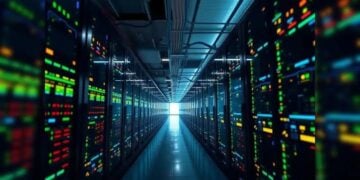
All of this runs on a distributed system that would give most IT departments nightmares. You’ve got media servers here, display controllers there, network switches everywhere. One thing goes wrong, and suddenly your multi-million dollar experience center is just an expensive hallway with some confused robots in it.

“The dream was simple,” Mandal explains. “I wanted the person managing the building to know what was happening without needing a computer science degree. If something’s about to break, they should know. If everything’s fine, they should know that too. No jargon, no guesswork.”
The real clever bit is how Fuild handles distributed systems. Most monitoring tools treat each piece of equipment like its own island. This server over here, that switch over there. Fuild looks at the whole ecosystem and figures out how everything connects. So when something goes sideways, you don’t just get an alert that Server #47 is unhappy. You get context: “Server #47 is unhappy because the storage array it talks to is maxed out, which is happening because Zone 3 is playing 4K video to 30 screens at once.”
For L&T, bringing in Fluid Tech made sense. The company’s CEO has been vocal about pushing new technology. Planet L&T was supposed to show off its digital chops.
The facility has been open since December 2020, right when everyone was still figuring out how to do Zoom calls properly. But it’s been running smoothly since then, with Fuild quietly doing its thing in the background. Visitors see the flashy robots and interactive displays. They don’t see the monitoring system making sure none of it crashes at an inconvenient moment.
What’s interesting is that Planet L&T is really just a proof of concept. The same technology could work anywhere you’ve got complex systems that need babysitting. Hospitals, factories, data centers, airports. Anywhere normal humans need to keep technical systems running without becoming experts in those systems.
“We built this for people, not for servers,” Mandal says. “The servers are fine. They do what they’re told. It’s the humans who need help understanding what’s going on.”

So next time you’re at a high-tech museum or corporate showroom, and everything just works, remember. There’s probably some Fluid software running in the background, translating computer-speak into human-speak, making sure the robots don’t rebel. And it was built by someone who understood that the hardest part of technology isn’t making it work. It’s making it understandable.