Image Source: pinterest.com
History of Robotics
Although the science of robotics only came about in the 20th century, the history of human-invented automation has a much lengthier past. In fact, the ancient Greek engineer Hero of Alexandria, produced two texts, Pneumatica and Automata, that testify to the existence of hundreds of different kinds of “wonder” machines capable of automated movement. Of course, robotics in the 20th and 21st centuries has advanced radically to include machines capable of assembling other machines and even robots that can be mistaken for human beings.
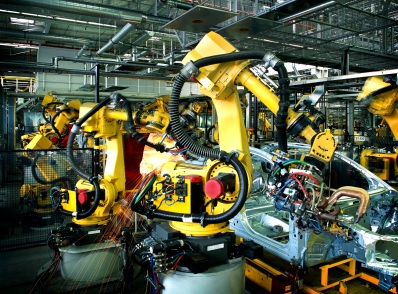
Essentially, a robot is a re-programmable machine that is capable of movement in the completion of a task. Robots use special coding that differentiates them from other machines and machine tools, such as CNC. Robots have found uses in a wide variety of industries due to their robust resistance capabilities and precision function.
Historical Robotics
Many sources attest to the popularity of automatons in ancient and Medieval times. Ancient Greeks and Romans developed simple automatons for use as tools, toys, and as part of religious ceremonies. Predating modern robots in industry, the Greek God Hephaestus was supposed to have built automatons to work for him in a workshop. Unfortunately, none of the early automatons are extant.
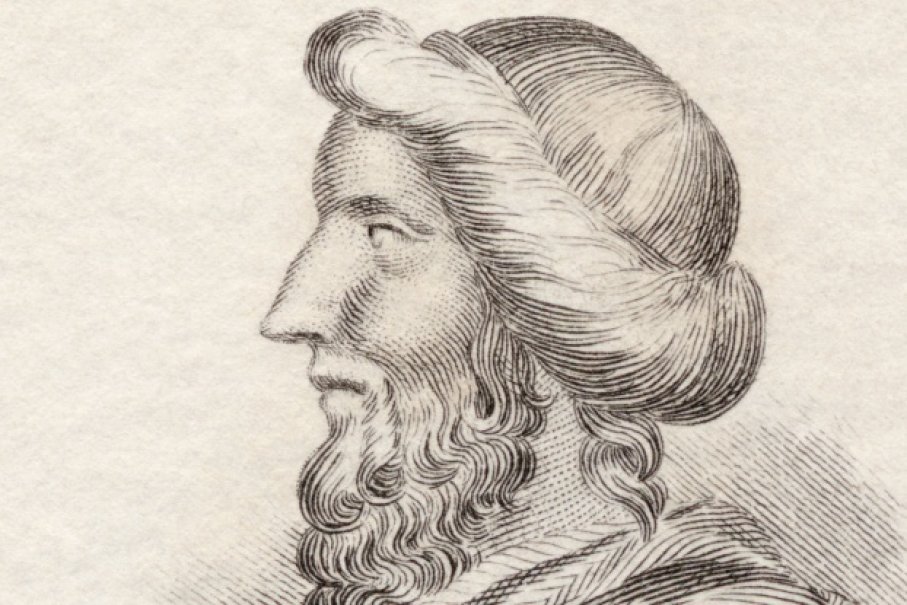
In the Middle Ages, in both Europe and the Middle East, automatons were popular as part of clocks and religious worship. The Arab polymath Al-Jazari (1136-1206) left texts describing and illustrating his various mechanical devices, including a large elephant clock that moved and sounded at the hour, a musical robot band and a waitress automaton that served drinks. In Europe, there is an automaton monk extant that kisses the cross in its hands. Many other automata were created that showed moving animals and humanoid figures that operated on simple cam systems, but in the 18thcentury, automata were understood well enough and technology advanced to the point where much more complex pieces could be made.
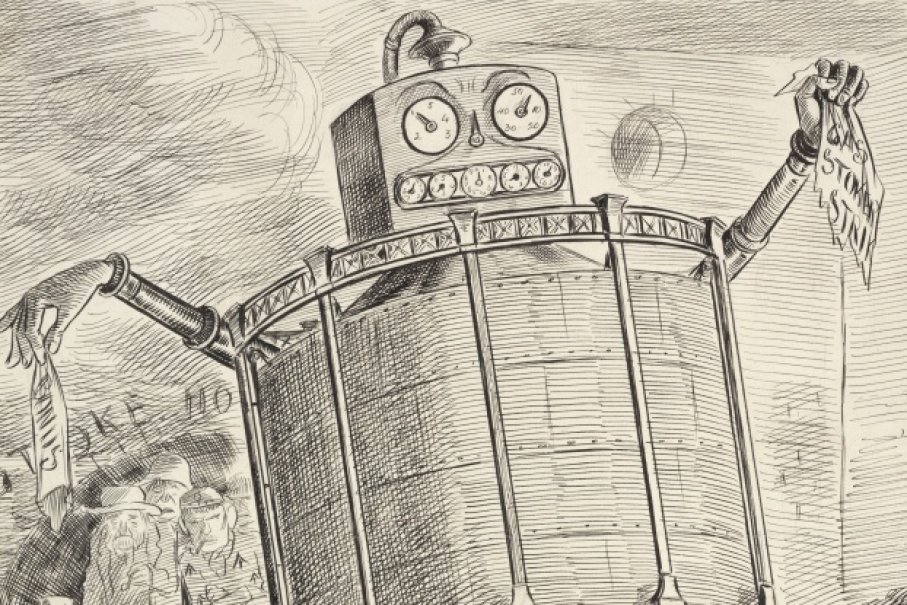
French engineer Jacques de Vaucanson is credited with creating the first successful biomechanical automaton, a human figure that plays a flute. Automata were so popular that they travelled Europe entertaining heads of state such as Frederick the Great and Napoleon Bonaparte.
Victorian Robots
The Industrial Revolution and the increased focus on mathematics, engineering and science in England in the Victorian age added to the momentum towards actual robotics. Charles Babbage (1791-1871) worked to develop the foundations of computer science in the early-to-mid nineteenth century, his most successful projects being the difference engine and the analytical engine. Although never completed due to lack of funds, these two machines laid out the basics for mechanical calculations. Others such as Ada Lovelace recognized the future possibility of computers creating images or playing music.
Automata continued to provide entertainment during the 19th century, but coterminous with this period was the development of steam-powered machines and engines that helped to make manufacturing much more efficient and quick. Factories began to employ machines to either increase workloads or precision in the production of many products.
The Twentieth Century to Today
In 1920, Karel Capek published his play R.U.R. (Rossum’s Universal Robots), which introduced the word “robot.” It was taken from an old Slavic word that meant something akin to “monotonous or forced labour.” However, it was thirty years before the first industrial robot went to work. In the 1950s, George Devol designed the Unimate, a robotic arm device that transported die castings in a General Motors plant in New Jersey, which started work in 1961. Unimation, the company Devol founded with robotic entrepreneur Joseph Engelberger, was the first robot manufacturing company. The robot was originally seen as a curiosity, to the extent that it even appeared on The Tonight Show in 1966. Soon, robotics began to develop into another tool in the industrial manufacturing arsenal.
[box type=”shadow” align=”aligncenter” class=”” width=””]Related Read:
15 Latest Developments In Robotics Field ![/box]
Robotics became a burgeoning science and more money was invested. Robots spread to Japan, South Korea and many parts of Europe over the last half century, to the extent that projections for the 2011 population of industrial robots were around 1.2 million. Additionally, robots have found a place in other spheres, as toys and entertainment, military weapons, search and rescue assistants, and many other jobs. Essentially, as programming and technology improve, robots find their way into many jobs that in the past have been too dangerous, dull or impossible for humans to achieve. Indeed, robots are being launched into space to complete the next stages of extra-terrestrial and extrasolar research.
As a practical matter there are only so many ways to increase productivity, or output per hour worked. Workers can work faster, harder, and smarter – or companies can substitute machines for humans, as they’ve been doing since the advent of the industrial age. This substitution trend is about to accelerate, driven by advances in robotics. What’s happening is this: Industrial robots are becoming more affordable at the same time that they’re becoming smarter, smaller, nimbler, and more adaptable and energy efficient. As the baby boomers continue to leave the workforce over the next decade, more and more companies are going to replace such workers with machines. Overall, industrial robots today perform about 10% of all manufacturing tasks, on average. Ten years from now, the percentage probably will have increased to about 25% – not just here in India, but worldwide – with annual spending on industrial robots more than doubling from about $11 billion today to more than $24 billion in 2025.
Let us have a look at 10 of the most famous historical robots:
1. The Jaquet – Droz Trio
When you imagine technology from two centuries ago, you may think about musket balls and wind-driven ships. But in 1774, Swiss clockmaker Pierre Jaquet-Droz and his sons Henri-Louis and Jean-Frederic Leschot completed three insanely intricate automata. The three automatons were called the writer, the draughtsman and the musician. All three used systems of cogs and wheels to perform their duties.
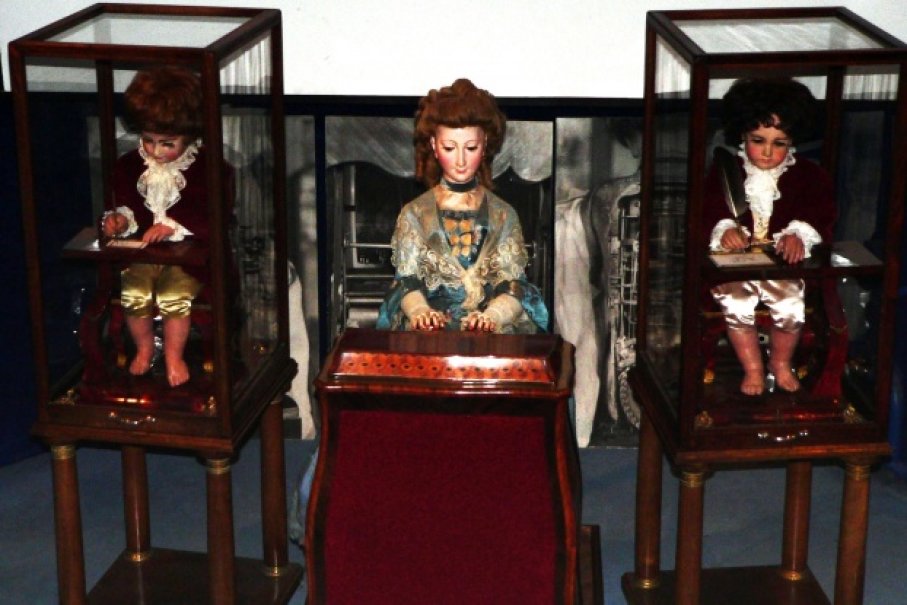
The writer can write custom sentences in fancy script. The doll actually dips a quill into an inkwell, shakes off the excess ink and then completes the commanded text in excellent handwriting. The draughtsman (actually a child) makes four different drawings, such as a dog. He blows dust off of his work periodically. The musician is a female figure that took nearly 10 years to complete and has 5,000 internal parts. She plays 45-second songs, actually moving keys on a clavichord with her fingers. Her chest rises and falls to mimic breathing, her eyes follow her fingers and she bows after each song.
You can still see all three pieces on display (and in occasional working performances) in Switzerland at a museum in Neuchatel.
2. A Dandy Digesting Duck
In 1738, French inventor Jacques de Vaucanson unveiled his masterpiece automaton. No, it wasn’t a tambourine player or a flutist, both of which he’d created in earlier years. It was a duck. One that ate grain from a hand and then promptly pooped.

The digesting duck was no toy. It had more than 400 moving parts in each wing. It could stretch, bend its neck, lie down, drink water and eat grain. Then, after a few moments, it would defecate. Vaucanson led people to believe that the digestion process was realistic, but in reality, a compartment in the duck was preloaded with poo before each demonstration. When the truth came out, a minor stink erupted.
Nevertheless, his gold-plated copper duck was a substantial scientific and mechanical work. Sadly, the duck disappeared at some point, never to be seen again.
3. Archytas of Tarentum Mechanical Bird
Archytas was a brilliant man with a keen mind for math, astronomy, politics and other disciplines. Some historians consider him a founder of mechanical engineering. Concrete evidence is scarce, but it seems that Archytas used his knowledge to fabricate a wooden dove (which may actually have been a pigeon) that could fly hundreds of feet into the air while tethered to the ground.
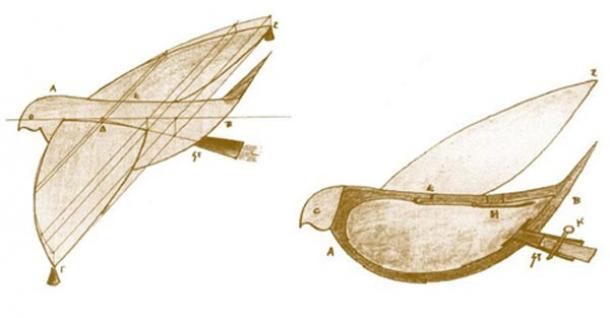
It likely worked because of either compressed air or steam. Some speculate that the dove worked via a pulley and counterweight system to hop from a lower to a higher perch. Regardless, the legend of Archytas’s technological prowess and his wooden dove have survived for centuries.
4. Da Vinci’s Mechanical Lion
In the early 1500s, near the end of his life, Leonardo Da Vinci was commissioned to create an automaton for King Francois I. The multi-talented Renaissance man didn’t disappoint.

He built a mechanical lion with the ability to walk. Upon reaching its destination, a compartment in the fully automatic lion’s chest opened, revealing a fleur-de-lis (a stylized lily) in honor of the French monarchy. Unsurprisingly, the lion was lost or destroyed at some point in history. In 2009, though, another mechanical tinkerer named Renato Boaretto drew inspiration from Da Vinci’s lion and made his own version, which walked, swayed its tail, moved its jaws and, of course, had a secret compartment that opened to reveal a fleur-de-lis.
5. Elektro
If you could imagine a robot built by a 1950s appliance company, you’d probably conjure a machine like Elektro. It was a shiny metallic biped that became one of the first celebrity robots. Elektro was built by Westinghouse to show off the company’s technological prowess. In 1939, Elektro went on display at the World’s Fair in New York, where he was a fabulously popular attraction. Like a seasoned stage comedian, he blew up balloons, told jokes and smoked cigarettes. He also moved his arms and walked, and his photoelectric eyes detected the difference between red and green.
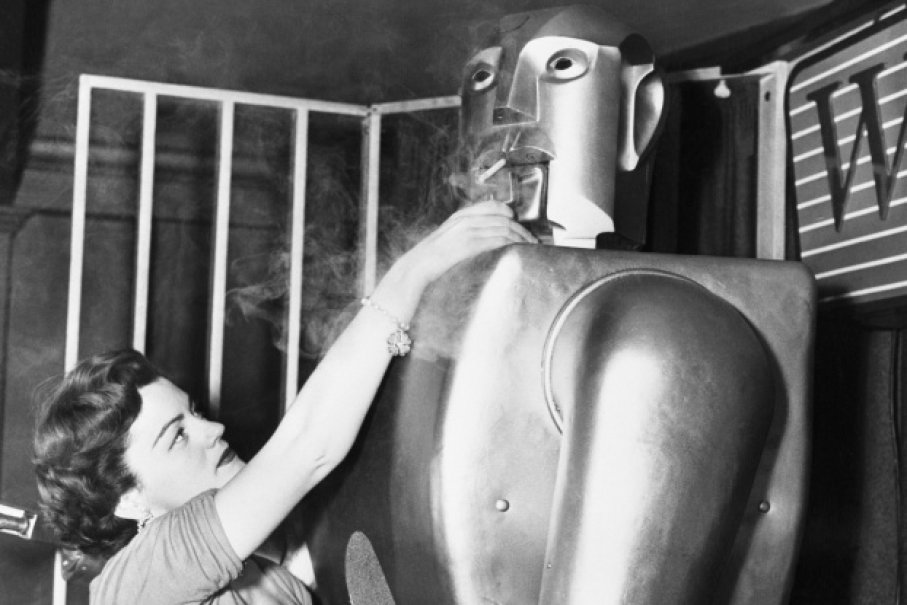
With the onset of World War II, the public fascination with Elektro faded and he wound up discarded in a basement. Eventually, he was found and rebuilt. He made a cameo appearance in the movie “Sex Kittens Go to College” and even went on national tour.
[box type=”shadow” align=”aligncenter” class=”” width=””]Related Read:
The Complete Anatomy Of Humanoid Robot Design ![/box]
He’s now on display in Mansfield Memorial Museum in Ohio.
6. The Artificial Eagle
In the mid-1400’s, Johannes Müller von Königsberg (known widely by his Latin pseudonym Regiomontanus) was tearing things up, intellectually speaking, in his home country of Germany. He exhibited a high degree of intelligence in astrology, writing, astronomy and math, and he put it to use in his work on trigonometry and astronomical tables. Oh, and in building an automaton.

As with so many historical accounts, exact details of Regiomontanus’s work are sparse. But as the story goes, he built a mechanical eagle that flew towards an approaching emperor, greeted him and then accompanied him as he entered the city. It’s easy to see why a ruler would be impressed by such a display. And the contraption helped to ensure that Regiomontanus would become known as one of the fathers of robotics.
7. The Flutist
In addition to his defecating duck, Jacques de Vaucanson made a number of other automatons, including a flute player that wowed onlookers. He supposedly first imagined the flutist while in the delirious grips of serious illness.
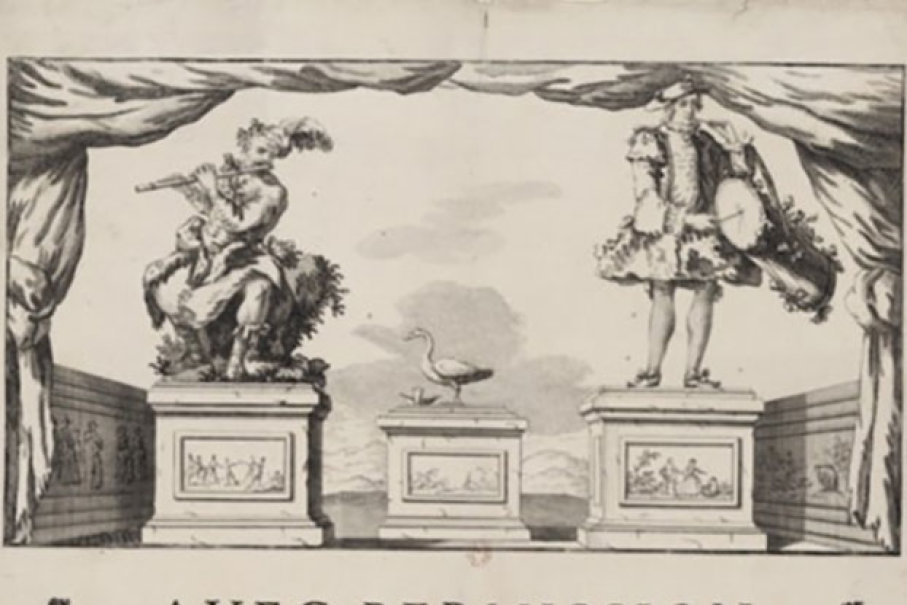
The wooden flutist, which was painted white to resemble a marble statue, was remarkable because at more than 5 feet (1.5 meters) tall, it was lifelike in size and shape. And it didn’t just play one tune – it knew a whopping 12 separate pieces of music.Clock-like mechanisms inside the body moved a series of nine bellows. The bellows forced air through the device’s “lips” and into the flute. The mouth and tongue changed position, as did the fingers, to create many different tones in the instrument.
8. Euphonia
Imagine, if you will, a disembodied, mechanical head speaking to you in a monotonous and eerie voice. No, it’s not the customer service line of your wireless carrier – it was Euphonia, a so-called talking machine built by Joseph Faber in the mid 1800’s. Faber researched the anatomy of human speech and fabricated mechanical parts after them. Then he assembled a machine consisting of bellows, pedals, chambers and even an artificial glottis. The operator used 16 keys corresponding to consonants and vowels, and in the proper hands it could recreate any European language in whisper, conversational voice or song.

It seems that people were a little creeped out by this robotic talking woman – or perhaps by Faber, too, who was reported to be an eccentric. Although not many people flocked to see his creation, Faber’s Euphonia influenced technology of the day and may have helped inspire the telephone.
9. Karakuri Ningyo
The Edo period in Japan lasted from around 1600 to nearly 1900, and it was a good time for arts, culture and, yes, automatons. During this period, karakuri ningyo (basically meaning mechanized dolls) were born.
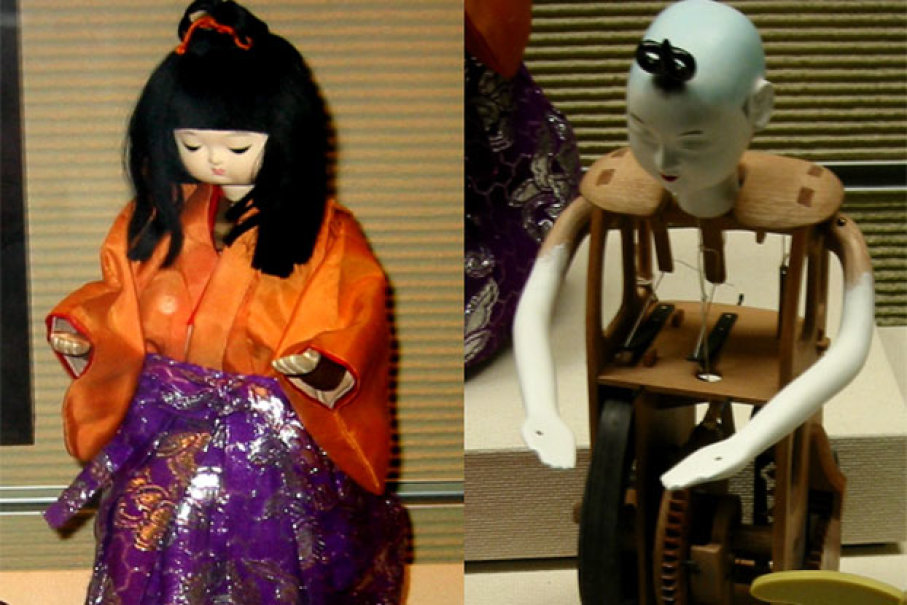
The dolls varied in their sophistication and capabilities. In one example, placing a cup of tea on a tray in the doll’s hands caused it to walk and then bow. Another doll was able to grip arrows and then fire them at a target using a bow. Still another could do handsprings down a staircase. All of them work thanks to internal clockwork gears and mechanisms. They were built mostly for entertainment. But it’s easy to see how they’ve influenced Japan’s modern-day obsession with robotics and technology.
10. The Hot Air of a Steam Man
In the late 1890s, reports surfaced regarding a steam-powered man that could walk 5 miles per hour over rough land. The inventor was George Moore, a professor who hailed from Canada. A breathless account in the New York Times indicated that a gas-powered boiler was tucked away inside the smoke-belching robot, generating about half a horsepower to drive the iron man forward. Attached to a post by a horizontal bar, the man could walk rapidly in circles.

Amusingly, there are no verified accounts supporting the steam man’s existence. He may have been a complete fabrication that spun out of control, perpetuated by lazy or incompetent reporting. Whether the steam man existed is irrelevant. It’s still true that many inventors and tinkerers managed to cobble together robots and automatons in the early days of technology. They did so by trial and error and without engineering software or YouTube videos to guide their efforts. That makes their efforts all the more notable and earns their works of art and mechanics a permanent place in robotics history.
[box type=”shadow” align=”aligncenter” class=”” width=””]Also Read: