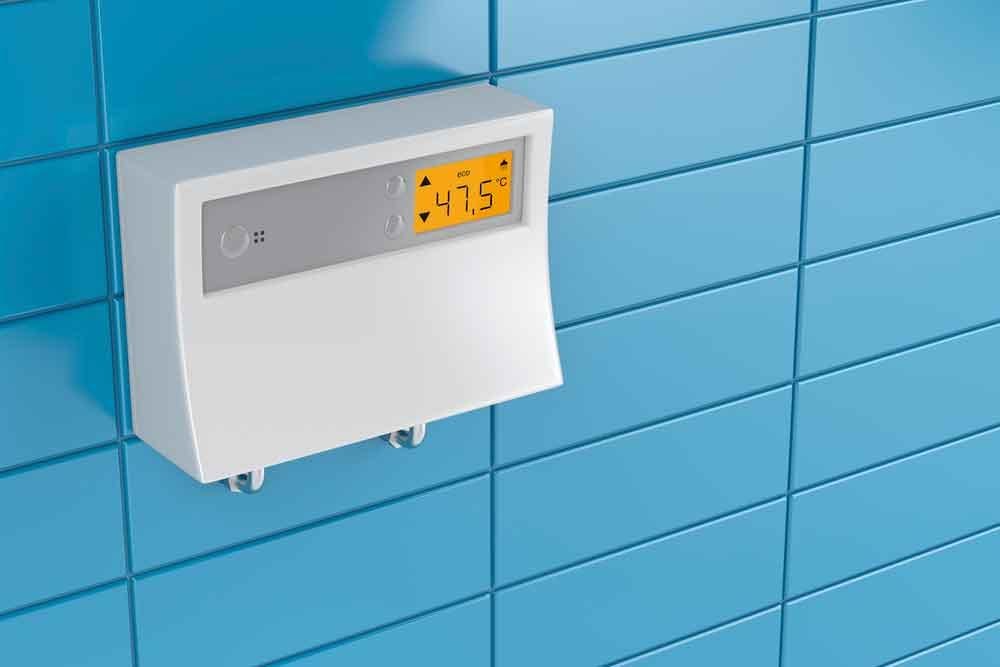
You’ve most certainly heard of a tank water heating system. A house with a tank outside – or inside – is the biggest tell-tale sign. Water is stored in the tank, preheated, and ready to use to give you hot water, in the shower, tap, or any other utility that uses water.
But have you heard of a tankless water heater?
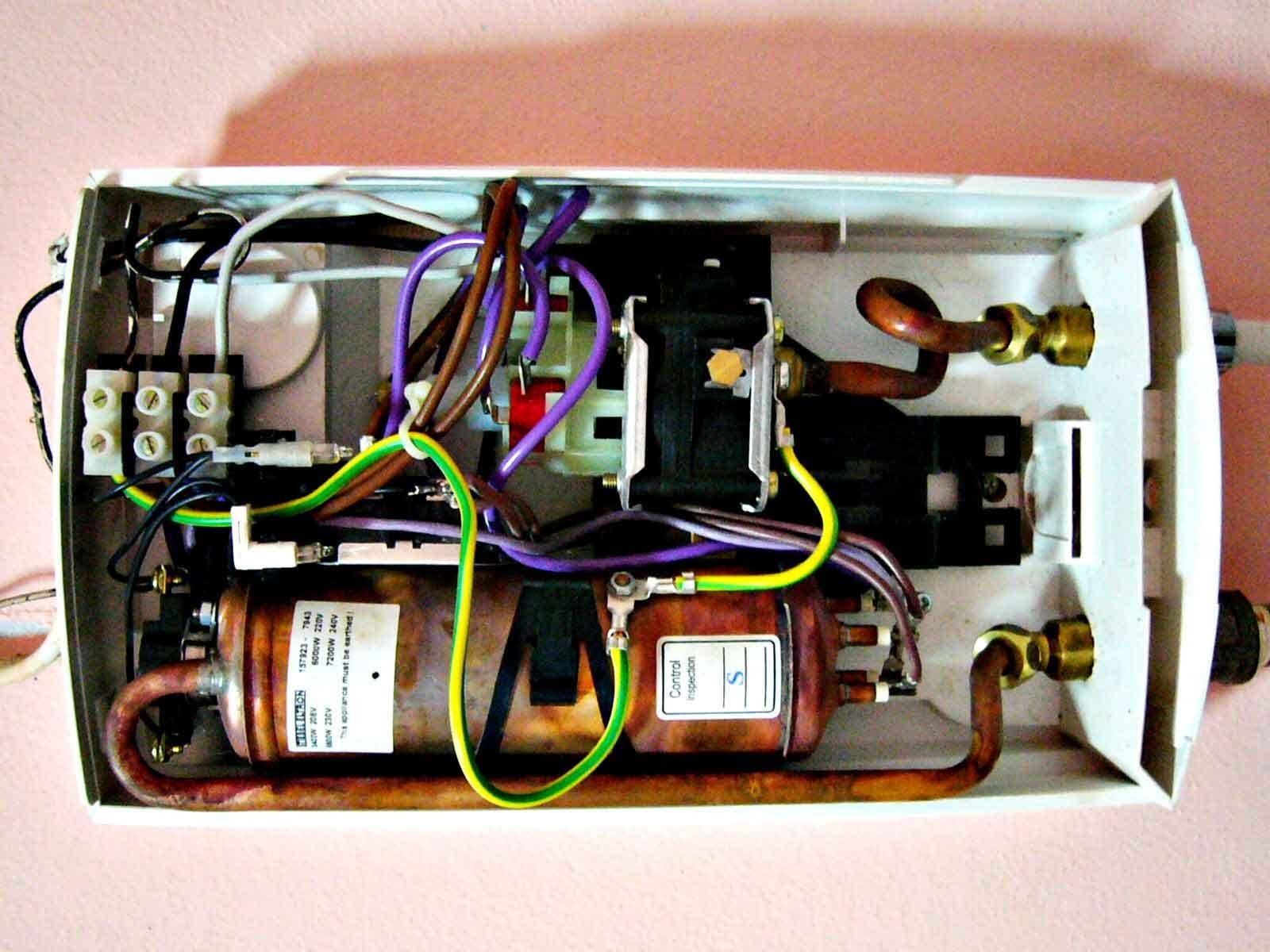
Source: Wikipedia
A tankless water heater, as the name suggests, does not use a tank! Instead, the water is instantaneously heated as it passes through the unit. Unlike a traditional tank unit, such a heater provides everlasting hot water. Because of this they are known as a demand-type water heater. Literally, water is heated when it is needed. And this can provide a lot of savings.
See, there is no stand-by energy loss. This is an issue that plagues tank water heaters since they must regularly maintain the temperature of the water they store. This can make tankless water heaters more than 20% efficient, resulting in $100’s of savings annually.
The question is, how do tankless water heaters achieve such a feat. Let’s explore the technology that goes into making these eco-friendly water heaters.
It’s all about the negative feedback loop.
Tankless water heaters use sensors to detect when there is a flow of water. Say you turn your shower on, or a tap. This will trigger the sensors to activate the internal components. When water begins flowing, a negative feedback loop is initiated to bring the water to the desired temperature.
Water flows through a heat exchanger (usually copper due to its high thermal conductivity) which is typically heated by an electrical, gas, or propane source.
The heat exchanger transfers heat to the incoming cold water, and so out comes the hot water. Theoretically, this provides continuous hot water since there is no set limit of incoming water, after all, it comes from your home’s inlet.
Tankless water heaters come in two types – point-of-use and whole-house. Point-of-use doesn’t require as much energy to run since they are smaller. They can be powered electrically. Meanwhile, whole-house units require more juice from something like propane or gas.
Point-of-use is usually used for 1 or 2 utilities and is significantly smaller than their bigger whole-house counterparts. They are also more efficient since they can heat water closer to the output source and avoid loss of heat as the hot water is closer to the outlet. A point-of-use heater is small enough to be installed under a sink or cabinet in a kitchen, if that’s where you wish to heat water.
Tankless water heaters have several innate advantages:
- They eliminate standby energy losses.
- They provide unlimited hot water.
- They take up less room than a traditional tank water heater.
- They also last longer than a tank water heater. Typically, around 20 years compared to 10 years
There are, however, a couple of disadvantages
- They can cost up to three times more than a tank water heater. Although this is paid back and then some over the life of the tankless water heater.
- If incorrectly sized, they may not supply enough hot water to the entire house or selected utilities. On top of this, flow rate and maximum temperature may suffer.
No need to worry though. The issues outlined in the second point are offset by correctly sizing the right tankless water heater. Also, many brands come with their own features to ensure temperature and flow consistency. We are going to go over these components now.
Correct sizing makes all the difference.
The biggest issue when it comes to tankless water heaters is sizing. That is, you need to know the requirements of your home first before purchasing a unit. It’s best to consult a professional or do some very detailed research.
In general, you need to be aware of a couple of factors – inlet temperature and gallons per minute (GPM) requirement
For example, say you intend to use your tankless water heater to supply the entire hot water needs of your home. You’ll need a powerful unit that can support a hefty GPM rate.
Let’s do a quick calculation. Let’s say the kitchen tap is 1.5 GPM, the shower is 3.0 GPM and the dishwasher is another 3 GPM. You’ll need a unit that supports at least a 7.5 GPM.
On top of this, you need to find the temperature incoming into your home to determine the temperature rise required by your unit. If you live in a colder environment, for example, you’ll need something that can offer a greater temperature increase.
Correctly sizing your unit is key to getting the most out of your tankless water heater. If you fail to do this, then you’ll likely be greeted with cold water as your unit fails to keep up with the high flow rate and/or desired temperature rise.
Despite this, different brands come with their own features to regulate water temperature and flow and improve functionality.
- Stiebel Eltron has patented advanced flow control which has been reiterated many times since its inception in 1970. This lowers the flow rate of the water if the demands exceed the capacity of the heater. In other words, you won’t be getting any cold-water surprises!
- EcoSmart has patented self-modulating technology that uses sensors to ensure that only the energy that is needed is used. Thereby maximizing efficiency.
- Other water heaters like those from Rheem and Rinnai use Wi-Fi functions and Amazon Alexa integration, respectively, to integrate with your phone and be controlled wirelessly.
Note that most tankless water heating systems use some form of flow control and self-modulation amongst other features. It makes sizing a thing of the past, though we’d still recommend such a procedure to get the most out of your heating unit. After all, a heating unit that can’t keep up will end up with a hot trickle!
These are some of the most popular tankless water heater brands and for good reason. Some of them have been around for decades and have a customer base that trusts the quality of these products. They’ve also been featured on Anthony Becker’s list for the best tankless water heaters on Your Best Picks. So, we’d recommend checking that list if you’re thinking of getting such a unit.